Frictionless Space Movement Tutorial
Posted: Tue Apr 14, 2009 5:07 pm
After my Brikspace battle, I was asked to create a new tutorial for players and hosts of other frictionless space battles. This tutorial doesn't tell you how to construct your fleets or design your weapon stats, but it does give an overview of how to manage frictionless movement.
Remember that the next person to post a frictionless space battle gets a free slot in my summer battle!
FRICTIONLESS SPACE MOVEMENT
Since space has no air resistance, spacecraft move differently than aircraft. For players wishing to field space fleets, this has two major consequences:
1. Spacecraft which don't fire their engines remain in motion, moving at the same direction and speed as they did when they cut thrust, until they fire their engines again.
2. the direction in which a spacecraft's nose is pointing is not necessarily related to the direction in which it is moving. The lack of air resistance removes the need to point the nose in a certain direction.
Now, how do you apply these principles, and track where the ships will end up next turn?
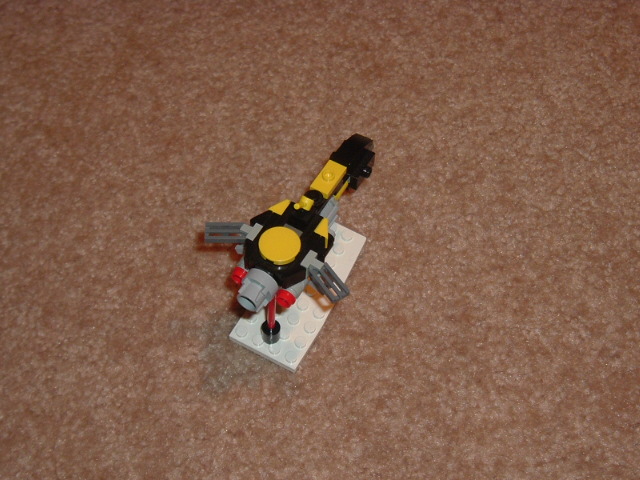
Most spacecraft will begin the game standing still, unless the scenario calls for something else.

When spacecraft fire their engines on the first turn, they move as many inches as their acceleration allows (or less, if the captain so desires). Measure the distance they moved with a ruler.

Construct a chain of bricks or plates with a length equal to the ship's movement distance. Orient this chain so that it's pointing in the same direction that the ship moved. This marks the path that the ship will move along next turn if it does not make any course changes. NOTE: courteous hosts will image-edit the ship's speed into the overview map so that players can see how fast their ship is moving. Trust me, it helps.

If the ship already has a vector in place, how do you move it further? First move the ship to the end of its vector path, as if it had not used its engines, and then make a course change. This also gives the direction in which the ship's nose is pointing. This is only significant if the ship has fixed-forward guns; otherwise you can ignore it.

Measure the distance from the start of the previous turn's vector to the end point of the ship's motion to get next turn's vector and distance. This is the path which the ship actually "followed" this turn. If any other ships or obstacles lie along this path, the ship will collide with them. Change the ship's course accordingly.
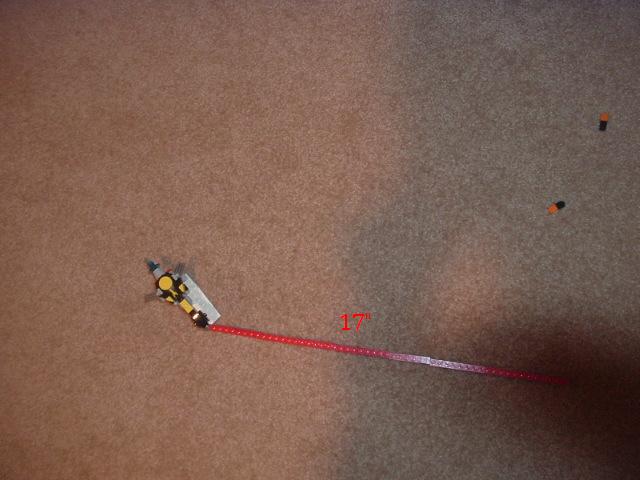
Build the ship's new vector, and the turn is complete.

Be careful with your speed as your vector will build up FAST if you boost for several consecutive turns. To slow down, all you need to do is accelerate the ship back towards its starting point.
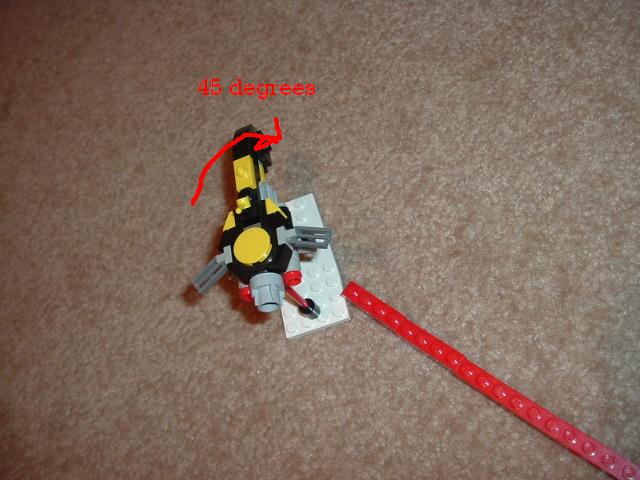
Finally, for every inch of acceleration you choose not to use during your turn, you can rotate your ship's nose by up to 45 degrees. This is useful if you have to line up your main guns on an enemy who isn't in the direction you accelerated this turn.
Remember that the next person to post a frictionless space battle gets a free slot in my summer battle!
FRICTIONLESS SPACE MOVEMENT
Since space has no air resistance, spacecraft move differently than aircraft. For players wishing to field space fleets, this has two major consequences:
1. Spacecraft which don't fire their engines remain in motion, moving at the same direction and speed as they did when they cut thrust, until they fire their engines again.
2. the direction in which a spacecraft's nose is pointing is not necessarily related to the direction in which it is moving. The lack of air resistance removes the need to point the nose in a certain direction.
Now, how do you apply these principles, and track where the ships will end up next turn?
Most spacecraft will begin the game standing still, unless the scenario calls for something else.
When spacecraft fire their engines on the first turn, they move as many inches as their acceleration allows (or less, if the captain so desires). Measure the distance they moved with a ruler.
Construct a chain of bricks or plates with a length equal to the ship's movement distance. Orient this chain so that it's pointing in the same direction that the ship moved. This marks the path that the ship will move along next turn if it does not make any course changes. NOTE: courteous hosts will image-edit the ship's speed into the overview map so that players can see how fast their ship is moving. Trust me, it helps.
If the ship already has a vector in place, how do you move it further? First move the ship to the end of its vector path, as if it had not used its engines, and then make a course change. This also gives the direction in which the ship's nose is pointing. This is only significant if the ship has fixed-forward guns; otherwise you can ignore it.
Measure the distance from the start of the previous turn's vector to the end point of the ship's motion to get next turn's vector and distance. This is the path which the ship actually "followed" this turn. If any other ships or obstacles lie along this path, the ship will collide with them. Change the ship's course accordingly.
Build the ship's new vector, and the turn is complete.
Be careful with your speed as your vector will build up FAST if you boost for several consecutive turns. To slow down, all you need to do is accelerate the ship back towards its starting point.
Finally, for every inch of acceleration you choose not to use during your turn, you can rotate your ship's nose by up to 45 degrees. This is useful if you have to line up your main guns on an enemy who isn't in the direction you accelerated this turn.