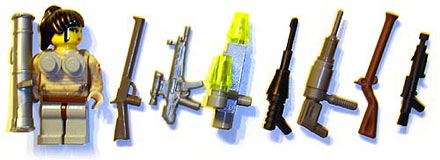
Chapter Three: Minifig Weapons
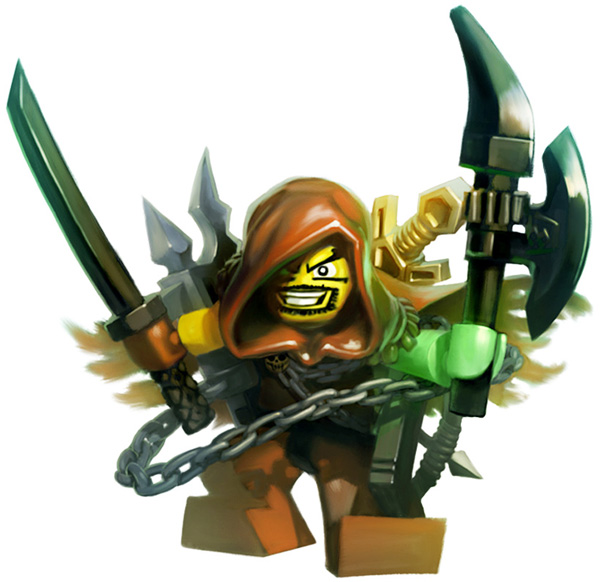
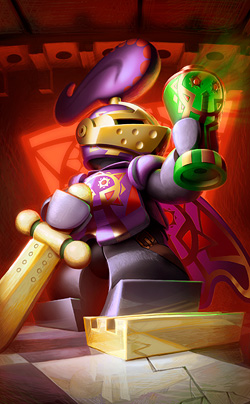
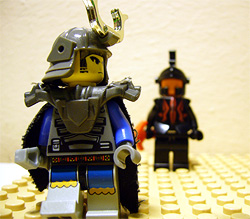
| With the logic-defying ability to weild an unlimited number of weapons simultaneously, the semi-mythical hero Zahru Trollarm brought the human minifigs of Medivo back from the brink of extinction in ancient times, slaying his way through hordes of Dungans, trolls, and the undead forces of the evil spirit Warhead. |
| Wiki entry: Zahru Trollarm |
|
The weapons a player arms their minifigs with are best chosen according
to which look the coolest. More practical considerations might increase
their army’s chances of victory, but that pales in comparison to
the importance of looking rad.
| Minifig Weapons and Equipment |
| Item |
Hands |
Use |
Range |
Damage |
Notes |
| Close Combat Weapons |
| Hand Weapon (S) |
 |
 |
2 |
CC |
 Action die Action die |
|
| Heavy Weapon (M) |
 |
/ |
3 |
CC |
Action die +2 |
 1" KnockBack to minifigs (no Disruption) 1" KnockBack to minifigs (no Disruption)
: Armor Piercing |
| Two-Handed Weapon (L) |
 |
|
4 |
CC |
2 Action dice |
can't be thrown
1" KnockBack to minifigs |
| Ranged Weapons |
| Short-Ranged Weapon (S) |
 |
/ |
3 |
6" |
 |
|
| Long-Ranged Weapon (M) |
 |
|
3 |
10" |
+1 |
|
| Explosive (S) |
 |
|
2 |
CC or 3" |
 Exp Exp |
affects all targets within 2"
1" KnockBack |
| Bodily Protection |
| Light Shield (S) |
 |
|
2 |
CC |
 Deflecting Parry Deflecting Parry |
|
| Heavy Shield (M) |
 |
|
3 |
CC |
Deflecting Parry |
provides cover |
| Light Armor |
 |
|
Armor +2 |
wearer can't swim |
| Heavy Armor |
 |
|
Deflection |
Half Speed
wearer can't swim |
| Desperate Measures |
| Bare Hands |
 |
/ |
0 |
CC |
Shove or Grab only |
Automatic Hit unless Parried |
| Minifig Tool |
 |
/ |
3 |
CC |
Action die -1 |
|
| Random Object |
 |
/ |
4 |
CC |
Action die -2 |
|
| Thrown Object |
 |
* |
* |
3" |
* |
* use object's Close Combat stats |
|
Less well-equipped minifigs will try to tell you that it's not the
size that matters, it's how you use it. This is
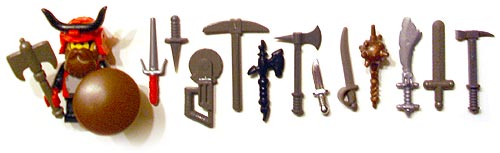
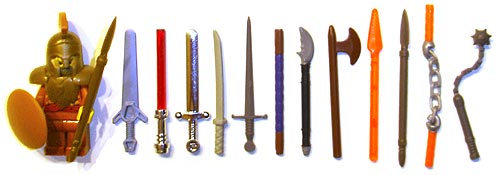
false. Minifig weapons, like anything of importance, are categorized by length. Weapons shorter than a minifig are Short (S), weapons equal in length to the height of a minifig are Minifig-Size (M), and weapons longer than a minifig are Long (L).
| Players might be tempted to think of the letters as standing for Small, Medium, and Large, but that would be much less precise. |
With only a few exceptions (shortbows, in particular), Short weapons and equipment are one-handed (). Minifigs can equip a Short item by itself, paired with another Short item (a sword paired with a shield, a crossbow with a knife, a pair of revolvers, a briefcase and syringe), or with a Heavy Shield.
Minifig-Sized items are more restricted: a Heavy Weapon can be paired with a Shield or Heavy Shield, but otherwise Minifig-Sized equipment can't be paired.
Long weapons are all two-handed () and can never be paired with other equipment by a minifig on foot. (There are exceptions for minifigs Jousting on Horseback, described later (Chapter H: The Horse).)
3.1: Close Combat Weapons
Killing enemies from a safe distance is all well and good, but any
minifig worth his plastic will tell you that's for cowards. Nothing beats the meaty
hands-on thrill of manually whacking an enemy into
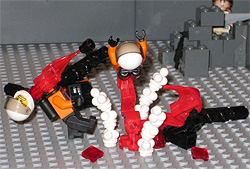
a pile of bloody plastic chunks. Close Combat Weapons are used to make
Close Combat attacks, as you might expect (5.2:
Close Combat).
The power of a Close Combat strike depends on the strength of the arm swinging the weapon, and the Damage ratings of Close Combat Weapons are based on the Action dice () of the minifigs holding them.
Normal minifigs have a default  Action die (Chapter 2: The Mighty Minifig), so their Close Combat damage is rated in d6es. Action die (Chapter 2: The Mighty Minifig), so their Close Combat damage is rated in d6es.
Hand Weapons
Hand Weapon: Use:2 Range:CC Damage:Action die
Hand Weapons are the lightest, most versatile, and most readily
available melee weapons: anything from maces, hand axes, and shortswords
to kitchen knives, bicycle chains, and crowbars.
Hand Weapons are light and easy to handle, and they leave the
second hand free for another one-hand weapon or equipment item. Hand Weapons can be paired with any other Short-length item (a Hand Weapon, Short-Ranged Weapon, Explosive, Shield, or Minifig Tool) or with a Heavy Shield.
Heavy Weapons
Heavy Weapon: / Use:3 Range:CC Damage:Action die +2
Notes: 1" KnockBack to minifigs (no Disruption); Armor Piercing
Heavier than regular Hand Weapons, but not requiring the dedicated
use of both hands like a Two-Handed Weapon, Heavy Weapons combine many of the advantages of each. Sometimes called Hand-And-A-Half
or Bastard Weapons, this category includes weapons like broadswords,
battleaxes, flails, spears, katanas, chainsaws, and beamsabers.
| Heavy Weapons do not include the LIGHTSABER™, because the LIGHTSABER™ is a trademark of Lucas Entertainment Company Ltd. LLC, and god forbid we ever risk infringing a trademark. |
Minifigs wielding a Heavy Weapon
cannot carry a second weapon of any type in their off hand, although
they may equip a Shield or Heavy Shield.
As a Hand-And-A-Half Weapon, a Heavy Weapon can be swung with one hand or two (if the minifig has a second hand free). Either has the same effect against unarmored targets, doing Damage equal to one Action Die plus 2.
When hitting a target with Deflection, a two-handed swing one can give a Heavy Weapon Armor Piercing power. When using two hands to swing a Heavy Weapon, the first layer of Deflection removes the +2 from the Damage rather than the Action Die, bringing the final Damage to one Action Die and making the Heavy Weapon as effective as a Two-Handed Weapon against armored foes. (Subsequent layers of Deflection continue reducing Damage as normal.)
| A minifig can't swing a Heavy Weapon two-handed if he's already used his off hand for something else during the current player's turn. If he's carrying an object in his off hand but hasn't used it yet, he can drop the object and immediately make the two-handed swing. |
At the attacker's discretion, any minifig who takes Damage from a hit by a Heavy Weapon can be pushed one inch directly away from the attacker, regardless of whether the Damage kills him. Unlike other forms of KnockBack, a hit from a Heavy Weapon does not cause a minifig to be Disrupted (4.1: Movement) - he's pushed backwards but stays on his feet.
Two-Handed Weapons
Two-Handed Weapon: Use:4 Range:CC Damage:2 Action dice
Notes: 1" KnockBack to minifigs; cannot be thrown
Two-Handed Weapons give heavy troops the power to destroy the
sturdiest armored foe, and the ability to strike at targets normally out of reach - behind
a rank of other minifigs, on separate building levels, or on horseback.
The drawback is that Two-Handed Weapons can be difficult to maneuver and wield effectively. Minifigs carrying a Two-Handed Weapon have a hard time navigating tight spaces,
and they need both hands free to use the weapon in Close Combat. (Players don't
have to pose the minifig with both hands physically holding the weapon
shaft. It's understood
that at the moment of attack, both hands come together so quickly to swing the weapon that the eyesight of Humans is unable to detect
it.)
A Two-Handed Weapon's extra inches of reach carry their
own vulnerability - an enemy minifig can sneak up closer than the
weapon's minimum effective range. A minifig swinging a Two-Handed
Weapon must have one hand on the bottom-most grippable part of the handle.
This may mean that he doesn't have enough space to bring the weapon's
striking surface into contact with the target. If the minifig is unable
to back up far enough to give himself room to swing, then enemies
inside that distance can only be Shoved, not Attacked (5.2:
Close Combat).
| There is one important exception to the Two-Handed Weapon's two-hands requirement: Jousting, decribed in H.3: Fighting From Horseback. A minifig riding a steed or vehicle only needs one hand to use a Two-Handed Weapon as a lance in a Charge attack, as long as it has a pointy tip. Jousting minifigs can use their second hand to wield a Short-sized weapon, Shield, or equipment item. |
Any minifig who takes Damage from a hit with a Two-Handed Weapon is pushed one inch directly away from the attacker, regardless of whether the Damage kills him. Unless he successfully Parries the hit, he is Disrupted as a result (4.1: Movement)
3.2: Ranged Weapons
It's hard to beat the joy of plunging a hand weapon into exposed
enemy flesh (although not impossible, thanks to the existence of Explosives).
But it can be frustrating when some jokester thinks it's
funny to keep bouncing around just out of reach of a minifig's hand axe.
It's times like this that a minifig wants a nice ranged sidearm, to wipe
the enemy grin off the enemy face in the most literal fashion (5.3: Ranged Combat).
While a Close Combat weapon's Damage is determined by the strength of the minifig swinging it, the Damage rating of a Ranged weapon isn't affected by a minifig's Action die. A rifle fires a bullet with the same amount of force regardless of whether it's fired by a musclebound action hero or a suspiciously well-armed infant.
Short-Ranged Weapons
Short-Ranged Weapon: / Use:3 Range:6" Damage:
Most light ranged weapons fall under the Short-Ranged Weapons heading: revolvers,
shortbows, blowguns, magic wands, and slings are good examples. Most
can be fired with one hand; common sense should be enough to
spot any exceptions (a light crossbow can be
fired with one hand, for instance, while shortbows and slingshots take two).
Like Hand Weapons, Short-Ranged Weapons can be paired with a second Short-sized item or a Heavy Shield. Because
their limited range puts minifigs dangerously close to an enemy's ability
to counterattack, Short-Ranged Weapons are often paired with a Hand
Weapon in the opposite hand, or paired with a second Short-Ranged Weapon and used in hit-and-run harrying attacks
that keep the Ranged attackers just out of enemies' reach.
Long-Ranged Weapons
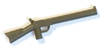
Long-Ranged Weapon: Use:3 Range:10" Damage:+1
Long-Ranged Weapons are higher-powered
than regular Ranged Weapons, allowing minifigs to pack a solid punch
while staying out of enemy units' immediate melee range. Muskets, longbows,
heavy crossbows, and a Magic Staff of Glitter Bolts are all Long-Range
Weapons. Long-Range Weapons are generally about the length of a minifig,
and always require two hands.
Explosives
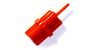
Explosive: Use:2 Range:CC or 3" Damage: Exp
Notes: affects all targets within 2"; 1" KnockBack
Hand-held Explosives come in a variety of forms for a variety
of purposes - grenades for throwing, rockets for firing, and timed
charges for dropping somewhere and getting the hell away. A minifig's
Explosive can do any of the above. If he throws it, it's a grenade;
if he fires it from a launcher (launchers are bought as special-purpose Short-Ranged
or Long-Ranged Weapons), it's a rocket. If he drops it on the ground
and says "I'm setting the fuse to go off on the end of my next
turn," then it's a timed charge; if he attaches it to an enemy vending machine and says "I'm setting the fuse to go off when I hit the button on this transmitter" (bought as a Minifig Tool (3.4: Desperate Measures)), then it's a remote detonator.
Once they go off, though, all Explosives work exactly the same way.
The Explosive does 1d10 Explosion damage to every exposed object and
surface within a two-inch radius.
| This can often include the minifig using the Explosive, if he fails to throw it far enough or uses it as a Close Combat weapon. Any successful Attack, Counterattack, or Parry with an Explosive sets it off. |
| Explosives and Cover |
| The amount of a target's surface exposed to an Explosive blast can affect how much Damage it takes - a minifig hiding behind a blast shield will take less Damage than one who's fully exposed. Action Modifiers for target size and visibility
(5.1: Making Attacks) are also used to modify Damage from Explosions, and minifigs completely hidden behind cover are protected from an Explosion's effects. Only the cover that survives the Explosion provides any benefit, however; destroyed cover is just more shrapnel in the blast. |
Objects damaged by an Explosion are also subject to KnockBack. Any loose objects,
such as minifigs not wearing seatbelts, are pushed one inch directly
away from the center of the Explosion. Fixed objects, such as brick walls,
are only Knocked Back if the damage breaks them into loose objects first. Minifigs who are Knocked Back are Disrupted (4.1: Movement). If a loose object is Knocked Back into a larger object that blocks it from moving the full inch, it takes an extra +1 point of Smash damage in addition to the Explosion damage.
Several effects introduced in later chapters also cause inches of KnockBack, including Shoves, Collisions, and strikes with large weapons. These can cause many inches of KnockBack in a single blow, potentially causing multiple points of Smash damage if multiple inches of KnockBack are blocked. Smash damage is always cumulative with whatever damage caused the KnockBack originally.
KnockBack is the introductory form of Thrust, which is covered in more detail in 9.3: Thrust Vectors. |
Each Explosive can only be used once, for obvious reasons.
3.3: Bodily Protection
A minifig's job is to do damage and kill enemies,
not to worry about coming home alive afterwards. A good leader knows that the best defense is a good offense, and a budget surplus should always be spent on more weapons and more
men rather than on protective gear. The mere presence of defensive equipment casts doubt on the soldiers' eagerness to throw away their lives meaninglessly for their Human's entertainment.
The cowards who request extra protection are likely to be among the
least popular units, so it's good to buy them some. The longer they
stay alive, the angrier the other minifigs will be, and
that's a good state of mind for battle.
Deflection
When Damage strikes a minifig wearing Heavy Armor, or one who successfully Parries with a Shield, he has Deflection against the blow. Deflection removes one Damage die from each source of Damage, canceling it before it's rolled.
| For weapons with multiple die types, Deflection removes one of each type of die, except for d12s (MOC Combat: Fancy Dice). If a target has Deflection against a source of Damage that has no dice to remove, then the Deflection cancels 1d6 points of Damage instead. |
By wearing Heavy Armor and successfully Parrying an attack at the same time, the most spineless minifigs of all can have Deflection twice, removing two dice from the attack's Damage.
Shields
Light Shield:Use:2 Range:CC Effect: Deflecting Parry
Heavy Shield:Use:3 Range:CC Effect: Deflecting Parry
Notes: provides cover
A Shield is a tool for Parrying Damage (5.2: Close Combat).
A Shield is primarily intended for Parrying Close Combat attacks, but it can Parry any incoming Damage in its bearer's field of view. Minifigs treat all these sources of Damage as if they were Close Combat attacks for the purpose of Parrying with a Shield.
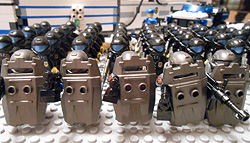
Shields come in two sizes - regular Short-sized Light Shields, and Minifig-sized Heavy Shields. The Heavy Shield is slightly more difficult to use, with a Use of 3 rather than 2, but it has an advantage: in addition to being used to actively Parry, the Heavy Shield can also be positioned as passive cover, either by itself, in conjunction with other cover elements on the field, or arranged together with the Heavy Shields of allied units (5.1: Making Attacks). Like any passive cover, its effectiveness depends on how it's positioned between the minifig and any attackers. If it's pointed in the wrong direction when the attack is made, it's too late to reposition it.
| Attacking a Shield |
| When an enemy minifig is entirely hidden behind a Heavy Shield, attackers may prefer to target the Heavy Shield itself rather than the minifig behind it. When attacked directly, Shields and Heavy Shields have an Armor rating of 1d10 with one level of Deflection. If this Armor is overcome, the item is rendered useless and destroyed. |
Body Armor
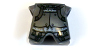
Light Armor: Effect:Armor +2
Notes: wearer can't swim
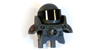
Heavy Armor: Effect:Deflection
Notes: Half Speed; wearer can't swim
For faint-hearted warriors who fear death but are also too lazy to lift a Shield in their
own defense, Body Armor is a great way to prolong their cowardly lives.
A minifig wearing Light Armor gets +2 to Armor against all incoming Damage (but not for internal Damage, like the effects of having been Poisoned or of swallowing a grenade). Wearing Light Armor prevents a minifig from swimming.
When a piece of Light Armor is combined with a visored helmet, it becomes Heavy Armor.
A minifig wearing Heavy Armor is even better protected, but has a harder time moving around - a bonus for cowards who want to always "coincidentally" be the last to arrive at the front lines. A minifig in Heavy Armor has Deflection against all incoming Damage, but is forced to move at Half Speed (4.1: Movement ).
If a minifig wearing Body Armor falls in water, he must either use his Action to remove the armor or hope that someone can fish him out in a hurry. Otherwise, he will die of drowning at the end of his next turn. (Assuming he needs to breathe, that is - non-living minifigs like androids and skeletons can continue wandering around happily underwater with no ill effect.)
Because of their poor mobility on foot, it's good to mount Heavy Armored minifigs on the back of a Horse (Chapter H: The Horse), or to post them in narrow gates and walkways where they can't be easily outmaneuvered and avoided.
| Fighting Minifigs with Deflection |
| Minifigs with Deflection can seem invulnerable against attacks from minifig weapons, most of which have only a single Damage die to remove. Overcoming Deflection can take a little extra strategy.
|
3.4: Desperate Measures
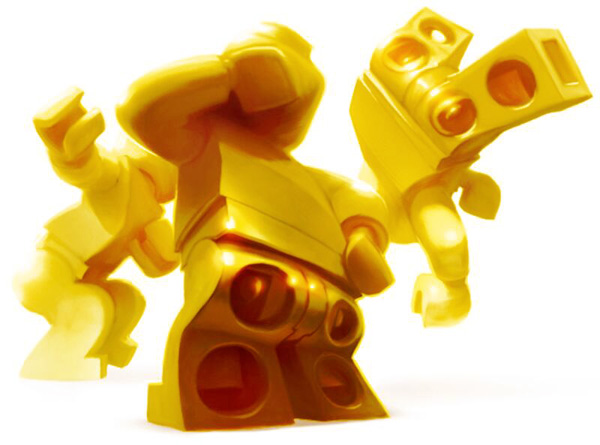
| Despite the hypnotizing power of minifig butts, mooning the enemy has not been shown to have any practical effect. |
| Wiki entry: Yellow |
|
Nothing makes a warrior feel dumber than arriving at a battle and
realizing he forgot to bring any weapons. Until he's able to scavenge an unattended weapon from the battlefield, his options are limited.
Bare Hands
Bare Hands: / Use:0 Range:CC Damage:Shove or Grab Notes:Automatic Hit unless Parried
A minifig lacks the ability to clench his clawlike hands into fists,
and the rigid nature of minifig legs means that the groins
of his enemies will never be exposed to his nonexistent knees.
As a result, unarmed combat between minifigs is an almost complete
waste of time. The only worthwhile use for Bare Hands is to
grab a dropped weapon in order to not have Bare Hands anymore.
Bare Hands cannot be used to Attack. If a minifig has at least one hand free, he can use it to Grab his opponent, either for the sake of hitting him with a weapon in his other hand, or holding the enemy in place for one of his better-armed allies. If both hands are empty, then the minifig can use both of them to Shove enemy minifigs, causing 2" of KnockBack and Disrupting them in an attempt
to put some distance between himself and the real warriors who remembered to come armed.
Bare Hands cannot be used to Parry a Close Combat Attack. They can be used to Parry a Shove or Grab (5.2:
Close Combat).
Minifig Tools
Minifig Tool : / Use:3 Range:CC Damage:Action Die -1
The official purpose of a Minifig Tool is to help minifigs do their jobs. Medix need their first aid kits, Mechanix need their wrenches, and Clerix need their holy symbols. Fortunately for everyone involved, all of these things can also be used to beat people to death.
Any tool designed to be gripped and carried in a minifig's hand can be used as a makeshift Hand Weapon with less effective stats. This includes not only obvious striking implements like hammers, torches, and frying pans, but also suitcases, coffee mugs, megaphones, and teapots. Larger Minifig-Sized Tools have the same stats but require two hands; these include rifle butts, shovels, metal detectors, pushbrooms, and oars.
Decapitated heads and skulls also count as Minifig Tools when used in combat. Not because this makes any sense, but because beating opponents to death with their friends' faces is Ossum.
Random Objects
Random Object: / Range:CC Damage:Action Die -2
In the Human world, table legs, broken bottles, and sufficiently large rocks are
all part of a cherished tradition of improvised weaponry. In BrikWars, minifigs are just as likely to improvise with a broken fender, a door, or an unsuspecting sheep. If a minifig
can't find a real weapon, Random Objects are better than nothing,
but that's mostly because having nothing sucks to such an impressive degree.
Most objects that can be picked up and swung around by a minifig can
be used as improvised weapons. Some objects are excluded:
items like flowers, hats, and shortbows are too flimsy to do any
damage, while objects larger than two minifigs in length are too big to pick up.
A Random Object must be a physical element. A minifig can't claim "there's a belt printed on
my torso, I'm taking it off and whacking you with it."
Thrown Objects
Thrown Object: Use:* Range:3" Damage:* Notes:* use Close Combat stats
If an object can be used one-handed in Close Combat (whether as a regular weapon, Minifig Tool, or Random Object), it can also be thrown. A Thrown Object has the same Use and Damage rating as if it were being used in Close Combat, but with a Range of 3" it can be hurled at targets out of immediate reach. By throwing a weapon rather than running in swinging, minifigs can avoid entering Close Combat and risking Counterattacks.
Once they're thrown, Thrown Objects have a known drawback in that surviving opponents can then pick them up and use them against the original thrower. Grenades are a popular workaround for this issue.
|
|