|
 : The Spirits of the Game

 |
|
|
|
|
Chapter MC MOC Combat  Ablogikal Binding Substance has unpredictable side-effects. The more ABS elements are gathered together, the more the Farce intensifies, and the more ridiculous the implausibilities that arise. These "Koincidences" warp reality in only one direction: the direction of conflict and mayhem, leading some to believe that insane or otherworldly minds guide them. These beliefs inform all major minifig religions.
Own illustration Uploaded, final
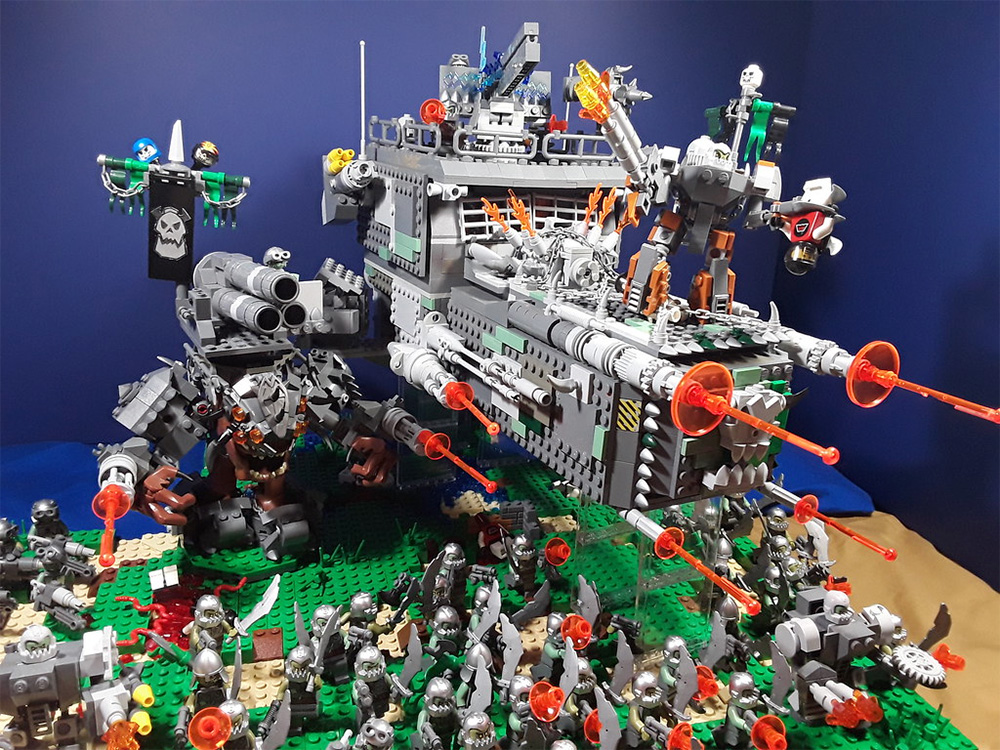
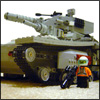
Once a minifig army has witnessed the glory of the Brootalz' Broozer Tank and watched its infantry divisions crumble under bombardment from the BAWKS warship, the all-minifig style of combat described in the Core Rules no longer satisfies. image rights: Kommander Ken, signed 7/23 Uploaded, final
MOC (mŏk)
(n.) Term used by plastic brick enthusiasts to describe constructions other than the ones designed by toy manufacturers and pictured on box covers. MOC is an acronym for "My Own Creation," which more often than not is a bald-faced lie, as fans shamelessly refer to any fan-made construction as a MOC whether it's Their Own Creation or not. The BrikWars Core Rules let Human players slap weapons into the hands of minifigs fresh out of the box and throw them immediately into brutish deminifigizing violence. As noble a pursuit as that may be, the Core mechanics can be applied just as easily to a force of toy cars or a street gang of homicidal teddy bears as they can to minifigs. Construction bricks, unconstrained by the prepackaged plotlines and locked-in designs of lesser toys, demand a more flexible style of wargame to match. The MOC Combat system allows players to give life to the limitless potential contained within a pile of bricks, and then to crush that life and that potential without mercy. In place of specific units with pre-assigned stat blocks and storylines, MOC Combat enables the creation and extermination of whatever weird and original units and structures, events, and gameplay players can spill out onto the tabletop or bash together during the course of play. Don't worry about having to scuttle your existing armies. The unit and weapon stats in the Core Rules were built with the MOC Combat system, so default units and custom creations play well together.
 With no controls or means of propulsion, and ladders only available as an aftermarket modification, the owner's manual for The LEGO Group's "8875 King's Siege Tower" must be truly fascinating.
From "Rainbow War II: Jellybean Apocalypse: Grail War"
Elements shown: LEGO own photo Watching minifigs hack and smash each other into plastic bits is loads of fun, but few tabletop strategists will be satisfied with minifigs-only combat in the long run — not while visions of tanks, castles, and nuclear assault dinosaurs dance in their heads. Rather than building a model to match a particular set of stats, the best creations result when players build their MOCs first and let the model determine the attributes. If a creation comes out a little more or less expensive than the budget calls for, it's no cause for alarm; nothing is more militarily authentic than a cost overrun. Players can add or remove a couple of minifigs from the army to make up the difference later. An arbitrary public execution for budget purposes will show the minifigs that their Humans mean business. The first step for any creation is to define its core structure (Chapter Seven: Structures), on which all of the functional components and devices are mounted. For simple buildings and fortifications, that's all that's required. However, creations are a lot more satisfying if they're loaded up with weapons and Gunners (Chapter 8: Weaponry), propulsion systems and Pilots (Chapter 9: Vehicles), or even their own Minds and abilities (Chapter 10: Creatures). Each of these are described in their respective chapters.
The MOC Combat system allows players to juggle a series of upgrades and downgrades to get exactly the flavor of creation they're looking for. That time is almost always better spent building more weapons instead. The easiest way to calculate a creation's core attributes is not to bother. For creation stats that don't need personalized attention, players can drop in default abilities with a simple Size measurement (7.1: Structure). A default Size 1" creature like a minifig or large dog has Action: A creation is defined by its Size above all else. The Size of a creation's central structure (ignoring surface components like cannon turrets, legs, and flame exhaust) determines how many weapons it can use in a turn, the number of times it can take damage that exceeds its Armor, and most importantly, its chances of elevating the other Humans' envy to the level of worship and/or theft. Second most importantly, a creation's Size inches also increase its attributes and abilities.
A basic object in BrikWars starts with Armor 1 As a creation's Size increases, it gains Enhancements to these basic attributes, described in detail in their respective chapters. Creatures and vehicles gain one Enhancement for each of their first five inches of Size. Unmoving structures gain Enhancements on odd-numbered Size inches (1", 3", and 5"). For either type, additional Size inches past 5" have no further benefit. Structures gain Enhancements more slowly than their vehicle and creature counterparts. This isn't because they're more difficult to improve, but because minifigs find them too dull to bother.
Any Enhancement added past these limits must be paid for with an Impairment. An armored ogre might gain Deflection at the cost of being Half-Minded, while a high-powered artillery piece might fire with extra Power but move at Half Speed. A creation can't take an Impairment that doesn't impair it in any way (a stationary outhouse can't take the Half Move Impairment, for instance), and it can't take multiple copies of any Impairment except Impairments to Value. In order to keep the Core Rules accessible for casual massacres, basic minifigs limit themselves to regular six-sided cube-shaped dice ( 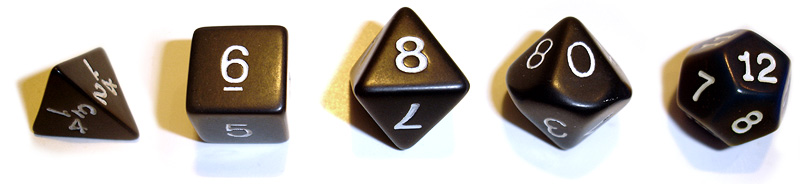
A  , ,
 , ,
 , ,
 , and , and
 .
Fancy dice in all kinds of polyhedral configurations are available online or at gaming hobby stores. Any real tabletop gamer is already familiar with these and has several pounds of them immediately at hand. .
Fancy dice in all kinds of polyhedral configurations are available online or at gaming hobby stores. Any real tabletop gamer is already familiar with these and has several pounds of them immediately at hand.
Elements shown: dice
own photo Uploaded, final
Like the
A die's number of faces is its die size. A four-sided die is a
The new dice score Critical Failures and Successes the same way as in the Core Rules (1.2: Numbers). Any roll in which all the dice come up with a result of "1" is a Critical Failure, and any die that comes up on its highest-numbered face (an 8 on a
In an Action Roll, an Action die that comes up on a numbered face of 6 or higher, ignoring modifiers or Bonus Dice, takes the Action Over The Top (4.2: Action). This is very common for Action While all dice are handled in a similar way, they each have an individual flavor dictated by tradition and superstition. Shape: Tetrahedron
Used for: Mindlessness
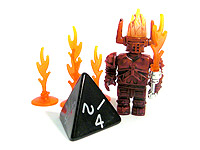 A d4 inspires a Mega Blok to set his own head on fire.
Elements shown: Mega Bloks, LEGO, d4 
What's the one requirement of a die? Players roll it and a number comes up. As far as minimum performance standards go, this isn't a tough one to meet, but a The The Shape: Cube
Used for: Most everything
 This minifig's weighted companion d6 is a source of comfort and stability, thanks to its reliable ability to spawn ridiculous violence.
Elements shown: LEGO, d6 
Standard units and standard objects use the square and reliable standard Because the majority of units and weapons are based around the Shape: Octahedron
Used for: Specialty training and blast weapons
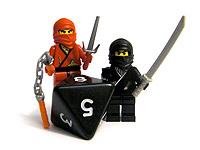 One of these ninjas is much better at camouflaging himself against this black d8 than the other two.
Elements shown: LEGO, Mega Bloks, d8 
The The
Shape: Pentagonal Trapezohedron
Used for: Structures, Explosions, and Heroes
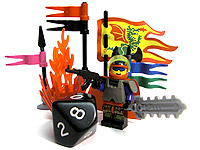 Where d10s are involved, there's no such thing as too over the top.
Elements shown: LEGO, Brickarms, d10 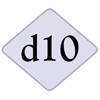 If something Ossum is happening, chances are good that
Shape: Dodecahedron
Used for: Magikal, divine, and extradimensional effects
 This purple wizard uses his SuperNatural powers to create a line of pastel-colored My Undead Pwnies.
Elements shown: LEGO, d12 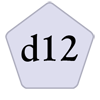
The is rarely seen in BrikWars, and is reserved for unique SuperNatural entities and effects. Wizards, demigods, and superheroes may have access to s if they're powerful enough, but for regular mortal units (and even Heroes) this die is normally out of reach.
Damage Shape: Nonexistent Icosahedron
Used for: Ensanity
The Ossum within a BrikVerse compounds over time, and events conspire to cultivate and intensify that Ossum without regard for moderation or responsible conservation practices ( Two types of Bennies have already appeared in previous chapters: the Over the Top Benny in 4.2: Action, and the MOM in 5.4: Charge!
MOC Combat calls on Humans to not only personalize their My Own Creations, but also their My Own Combat. By giving Bennies to their enemies, players have the opportunity to steer the group towards their preferred kinds of fun, and the mutual fun of everyone at the table supersedes any consideration of victory or loss. If players like impressive models, they'll give Bennies for impressive models. If they like hilarious hijinks, they'll give Bennies for hilarious hijinks. This keeps everyone at the table aware of what makes the game most fun for everyone else, and the more freely they hand out Bennies, the more freely they're likely to receive them in return. When someone does something Ossum that deserves recognition, the Benny exists to let enemies grant each other a brief ray of hope before heartlessly crushing it brutally under heel once again. Any time a player does something cool that makes the game better, one of their enemies can award them a Benny. Examples include:
To create a Benny, a player grabs any pair of construction bricks, attaches them together, calls it a Benny, and gives it to their chosen enemy. If appropriate, they can give it a name to commemorate its origins (e.g., "The Almighty Benny of Heroic Self-Immolation.") From that point forward, the enemy can break the two bits apart at any moment to add a one-time Bonus There's a less enduring type of Benny which grants the same general-purpose Bonus Instant Bennies can't be saved from turn to turn, so there's no point in a player trying to earn one if they're not in a position to spend it immediately.
Unlike regular Bennies, Instant Bennies are awarded automatically when certain conditions are met, and their use is subject to restrictions. The five standard sources of Instant Bennies are First Blood, Inevitable Betrayal, Deadly Ground, Last Man Standing, and King of the Hill. Players can add or make changes to this list to support their scenario or preferred playing style.

There's no more popular justification for killing a truly unbelievable number of people than flags. Even more than for doughnuts, minifigs will commit an unlimited amount of murder for scraps of cloth with colored patterns.
image rights: Aoffan23 uploaded
In the Core Rules, military budgets are simple. Armies are balanced if players decide they are, and they can use Minifig Budgeting to double-check their figures in any situation where shrugging and handwaving is insufficiently rigorous (2.2: Minifig Armies). In MOC Combat, customized creations make budgeting more complicated. The relative values of an orbital battlestation, an ammunition barrel full of minifig babies, or the Humans' dog running in and stomping all over the construction-brick battlefield are not as simple as counting minifigs. The wider range of units and constructions may lead players to consider more nuanced forms of accounting, even if they ultimately reject them and go right back to blowing everything up without regard to price tags.

If players insist on calculating the value of their armies, everyone in the area should immediately stage a Preemptive Attack (2.2: Minifig Armies), even if they're not part of the game and are complete strangers. If the offending players survive their injuries and continue to insist, then they can line up their units and compare Unit Inches. 
The fighting minifigs of UltraMaroon™ Colour Guard™ are tasked with protecting the trademark color palette of GrimDark Worst-Schlock, as well as advertising their services as collectible mercenaries. Their proud logo, the Unit Inch, is emblazoned on every available surface, serving as both their battle standard and their individual price tag.
Own illustration Uploaded, final
A typical minifig, appropriately armed, delivers two dice of effect at a five inch range. This is the rough effectiveness per inch for all combat-ready units, and so Humans quantify their armies' strength in the measurement most important to them: Unit Inches, or Ü. The Unit Inch value of an army is roughly the added Sizes of all of its combat-ready minifigs, creatures, and vehicles. Only active units have a Unit Inch Value. Carried weapons, devices, and ammunition depend on the Power and Actions of the active units needed to operate them. Buildings, scenery, and terrain conditions are uncatalogued set dressing. Non-combatants and unaligned bystanders are expendable decoration, more useful as spectators or target practice than as meaningful participants.
The base Unit Inch Value of a unit (minifigs, autonomous laser turrets, artificially intelligent spider robots) is equal to its inches of Size (7.1: Structure). In MOC Combat, minifigs and non-Heroic minifig Specialists are each worth one Unit Inch. Minifig Heroes are worth two Unit Inches. Units can take Enhancements and Impairments to their Unit Inches, adding discounts or premium surcharges to their value. Each Enhancement decreases the unit's value by one half Unit Inch, to a minimum total value of one quarter Unit Inch. A Unit Inch Impairment increases the value by one Unit Inch. For putting a Value on exceptional units, players can agree to ignore the usual limitation of one Impairment of the same type, but it's best to avoid it.
It's almost always more cost effective to spend Unit Inches on new units than to use Unit Inch Impairments to upgrade existing ones. Structures with no Action or movement of their own are not active units and have no Unit Inch Value. If a weapon isn't carried by or mounted on an active unit (a wall-mounted ballista, a machine gun nest), it's treated as a structure. Movable weapons (wheeled catapults, minifig-portable artillery pieces, five story parade balloon characters with working chainsaws) can also be treated as structures if they can't move under their own power. In either case, the weapons have no Unit Inch Value in themselves; their Value is in the minifigs operating them. For creatures and vehicles worth at least one Unit Inch that depend on a minifig operator (Horses, giant hamster balls, militarized cotton candy carts), a single operator is included for free. A free minifig operator is a nice perk, but it's balanced by the drawback of creating an asset that can be easily disabled or commandeered if that operator gets distracted and wanders off.
The free operator can be any non-Heroic minifig or Specialist costing one Unit Inch or less, but the normal choice is one of the three Operator Specialists. For Horses and other steeds, the Rider specializes in mounted combat (H.2: Riding a Horse). For mobilized weapons, the Gunner is trained to fire large weapons with greater precision (8.5: Manning Guns). Static weapon emplacements are structures with no Unit Inch value, so they don't meet the minimum value requirement for a free Gunner.
For vehicles, the Pilot has the ability to push a ride past its logical performance limits (9.4: Piloting). Unit Inches make it easy for players to compare their relative power, both at the start of battle and as combat progresses. At the beginning of the battle, if players' forces aren't equal, any player whose army is worth fewer Ü than their most powerful opposing player can take one Benny per Ü of difference. Depending on the degree of imbalance, underdogs can be given other concessions according to the players' tastes, like first choice of deployment location, an extra first turn, or easier combat objectives than their larger opponents. When players form alliances, count the total strength of the alliance rather than the individual players. If an alliance receives underdog Bennies at the beginning of a battle, any member of the alliance can use them at will, regardless of their other allies' plans or protests.
Players can't maintain their full Unit Inches indefinitely. A player's Unit Inches go down over the course of an engagement as minifigs and materiel are lost to destruction, theft, and abandonment, or as the Effective Size of large creations is chipped away by Size Damage (7.2: Taking Damage). Unit Inches can be regained as incapacitated minifigs are revived, broken machines are repaired, enemy vehicles are commandeered, and surprise reinforcements appear in the nick of time. When an army is reduced to half of its original value in Unit Inches, or if one side in a conflict has less than half as many Unit Inches as their strongest opponent, they can seize the disadvantage and declare that they're Fighting a Losing Battle (MC.5: Endgames). In BrikWars, when players are finished having fun, then the game is over, even if the battle itself is still raging along for the minifigs involved. In the best case, everyone agrees on this at the same time. The game ends, and players can immediately jump to deciding whether any side "won" and what the consequences were. Other times, some of the individual players might have already lost the battle, or at least have lost interest, while the rest of the table is still eager to keep going. As a rule of thumb, as soon as any one player has lost half of their minifigs or Unit Inches, it's a good time to stop and check how they and everyone else are feeling about continuing. If the tide of battle has brought a player or players to a point where they can no longer meaningfully engage, then it's time to kick off one or more endgames. 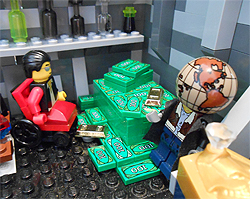 How does Mobfather Scratch sleep at night? On a bed made of money.
Money has little purpose in the BrikVerse, apart from the normal purpose of all things in the BrikVerse, which is to give minifigs a reason to murder each other. image rights: Scratch uploaded
If a player has to leave immediately, whether due to ennui, diaper-related emergency, or fatal brain aneurysm, the battle doesn't have to end. That player's forces become mobs, and they (along with any other non-player-affiliated units in the game) are controlled by mob rule. Under mob rule, mobs have their own turn (or set of turns, if there are distinct mob factions) after all the player turns are complete. A player-controlled army converted to mob rule can keep its place in the turn order, or be combined with other mobs, according to players' preference. Forces abandoned by their animating Human suffer an immediate crisis of leadership. During a mob turn, the remaining players (and any sufficiently interested Human bystanders) take turns picking mob units one at a time and controlling their movement and Action. This continues until all of the mob units have moved for the turn, or until a majority of the remaining players have declined to control any more of the mobs for that turn. When controlling mob units, the player with the fewest Unit Inches' worth of remaining forces goes first, and players take turns in sequence afterward. Depending on the preferences of the remaining players, a faction taken over by mob rule might continue to behave rationally (or as rationally as they ever did), or there may be no boundaries on what players make them do. If a battle is bogged down by turtling forces and tactical stalemates, it doesn't mean players have to helplessly watch as tedium steals their victory. Instead, players can turn up the action.
Soldiers facing defeat still have opportunities for glory. When an army is reduced to half of its original value in Unit Inches, or if one side in a conflict has less than half as many Unit Inches as their strongest opponent, the players can declare that they're Fighting a Losing Battle and receive special bonuses as their forces go down in flames. But there are no take-backs — no matter how well they do from that point forward, at the end of the game, those forces lose, by whatever Koincidental post-battle disasters the players have to make up in order to make it true.
| ||||||||||||||||||||||||||||||||||||||||||||||||||||||||||||||||||||||||||||||||||||||||||||||||||||||||||||||||||||||||||||||||||||||||||||||||||||||||||||||||||||||||||||||||||||||||||||||||||||||||||||||||||||||||||||||||||||||||||||||||||||||||||||||||||||||||||||||||||||||||||||||||||||||||||||||||||||||||||||||||||||||||||||||||||||||||||||||||||||||||||||||||||||||||||
|
|
|


 :
:


 s.
s. is also used for Blast damage that spreads over an arc, such as a dragon's breath or a ShotGun blast.
 s
s s
s