|


















|
|
|
|
|
Chapter Thirteen
Assaults and Escapades
Conflicts of every scope and scale run rampant throughout a campaign's strategic arena, most of them beneath a Human's attention. In order to prevent their Humans from losing interest and wandering off, armies of minifig administrators and producers work behind the scenes to sweep logistikal details, tactical quagmires, and mop-up operations under the rug. Like a made-for-TV war movie or a tightly-scripted reality show, off-screen battles and mountains of casualties are hand-waved away, keeping the campaing spotlight focused solely on the Human players' high-stakes Assaults and Escapades. It doesn't mean the other battles aren't happening, it just means no one cares.
In each campaign round, the Faction taking the Offensive decides the direction of the next attack: a Heroic Escapade to gain valuable loot for the cause, or a direct Assault on enemy-held territory. 13.1 Heroic Escapades Rather than committing to a full-scale Assault, an Offensive Faction can send Heroes out to grab whatever loot isn't nailed down and escape to tell the tale. Most campaigns start with a series of Heroic Escapades, as the Factions' Heroes go on raids for strategic resources and Glory while their leaders work on getting the main Army mobilized for more serious Assaults later on. Introducing the Hero Heroic Escapades require Heroes. While regular minifigs stand eternally ready to ignore orders and circumvent the chain of command, it takes an inspiring Hero to gather up that collective insubordination and construct an adventure out of it. Apart from garrison defenders and other unsuspecting locals, any force participating in a Heroic Escapade must be led by one or more Heroes. Factions can send Heroes from their existing Armies, or they can use the Escapade as an opportunity to introduce new ones or re-introduce defeated ones. Unlike other units, Factions can't recruit or repair Heroes through standard Production. Heroes rise on their own, waiting for the perfect moment to steal the spotlight from lesser minifigs who foolishly built their careers on hard work and sacrifice rather than dramatic poses and fantastic wardrobes. Any Faction can attract new Heroes and introduce them at the beginning of a Heroic Escapade a cost of two Unit Inches' worth of Budget each, regardless of resources or Production capacity. Any Faction with a Hero who was defeated can spend one Unit Inch for him to reappear after making a miraculous recovery, even if he's held prisoner by an enemy Faction. (He still starts the battle imprisoned, but now he can take an active role in his own rescue attempts.) An Escapade only lasts as long as its Heroes do. Without a Hero's charisma and inspirational posturing, normal minifigs and their immediate superiors remember the work they were supposed to be doing before they got suckered into another damn fool crusade. If all of a Faction's Heroes in an Escapade are eliminated, their adventuring is over, and their remaining forces must immediately choose a Fighting a Losing Battle scenario (MC.5: Endgames). Loot Objectives Grinding mobs is for amateurs. If a Hero has the spotlight, he's going to use it to nab some trophies. A Heroic Escapade always has loot as its objective. Whether treasure, magic weapons, captured hostages, secret plans, or just boring old Production resources, it's only an Escapade if it has loot to escape with, leaving all the other so-called Heroes empty-handed. If defenders are actively using loot items like Heroic Weapons or loot Units in their defense efforts, the value of these items is included in the defenders' Unit Inch total for determining the battle's underdogs. If they're locked away and protected from the defenders as much as from the attackers, they're not included in the defenders' tally. Battlefield Raids If Heroes pull an Escapade to raid an existing Battlefield, its loot is determined by the details on its Battlefield Card. Production Facilities have resource loot, and their Production abilities can be disrupted if it's stolen (11.3: Resource Production). Faction Headquarters have treasure loot, which can deduct Unit Inches out of the owner's Budget and into the Budget of whichever Faction successfully steals it (11.1: The Faction Headquarters). If a Faction is holding prisoners at the chosen Battlefield, they'll be available as loot as well. If the Escapade takes place on an existing Battlefield but no Faction is in control of it, units, weapons, corpses, and property damage may be left behind from previous battles. Escapading Heroes can take an unclaimed Battlefield itself as loot if they defeat all rival Heroes and survive, as if their Faction had achieved victory in an Assault. A Battlefield already owned by a Faction can't be conquered in a Heroic Escapade, even if a Hero kills every other unit on the field. Heroes on an Escapade don't bring the off-battlefield logistikal support necessary to consolidate control of a Battlefield that already has an owner.
Quests 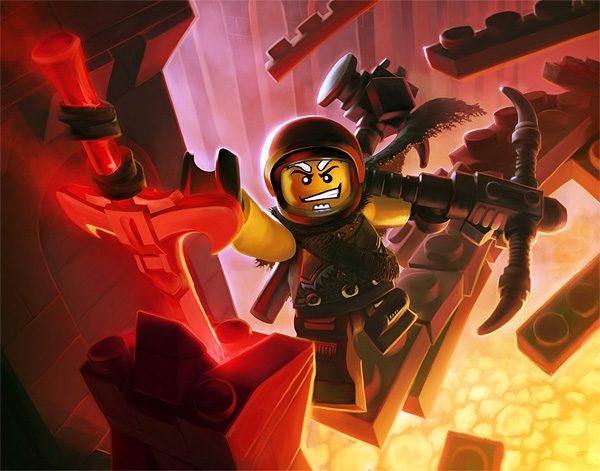
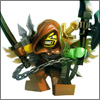
Before becoming the leader of the Metal Warriors, BFenix first had to satisfy the Gods of Metal and claim the forgotten blood sword RAGE in the Steelliums of Hellius.
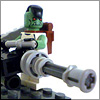
Character by BFenix 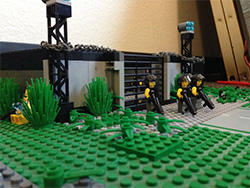 On a remote moon in the Fang Sector, multiple forces are coming for the prisoner that the United Systems Alliance is holding in the Jacksonville Naval Base detainment facility.
If no existing Battlefield has the loot the Heroes are looking for, they'll have to quest into uncharted territory, and players will have to build an ad hoc Quest Battlefield for the Offensive. The Unit Inch value of the loot (12.1: Military Development) and the Fortification level of the Quest Battlefield are equal to the amount of Glory the Offensive Faction spends to pull its Escapade there. If the quest loot belongs to a defending Faction (captured prisoners to be rescued, a Production shipment that's about to get ambushed, or a secret diary about to be read without permission), then that defending Faction can select units from its Army to use as garrison forces defending the loot. Otherwise, players come up with a garrison force hostile to all invaders, as appropriate to the loot being defended and the Quest Battlefield's Fortification level. These might be monsters, cultists, warrior monks, corporate security, or any other group the players decide on. When the battle starts, control of the non-Factional defenders can be assigned to a player whose Faction isn't participating, or they can be treated as Mobs controlled by Mob Rule (MC.5: Endgames). 13.2 Assaulting the Enemy Once the Offensive Faction has built up its capabilities enough, it can make a direct Assault on an enemy-held Battlefield, staging a conventional military attack to conquer territory, destroy infrastructure, steal loot, or engage in enemy slaughter for its own sake. Targeting Infrastructure Decisive victories and defeats aren't always necessary or even meaningful in a campaign. Factions can enjoy all kinds of gains and losses regardless of who ultimately controls the Battlefield, whether piling up casualties, stealing loot, or inflicting damage on deserving foes. Sometimes it's about the journey. Rather than trying to hold or conquer territory, a Faction can focus on disabling or destroying Production infrastructure by targeting a Battlefield's Facilities, Workers, and resources. Raiders might steal them as loot, defenders might evacuate them to safety, and anyone present might destroy them completely through malice or mismanagement. Destroying infrastructure can be a good option for attackers who don't expect to conquer a Battlefield, defenders who don't expect to hold it, or disgruntled locals looking to blow off steam. The best way to lay claim to Production resources and war materiel is by conquering the Battlefield that holds them, but Factions can also send units to seize and evacuate them off a friendly edge of the Battlefield. When the defensive Faction or its allies evacuate items, they remain in possession of the defensive Faction, safe from marauding enemies. When any other Faction evacuates items off their own edge, they become loot for that Faction. Victory and Defeat In the Core Rules and MOC Combat, defeat and victory exist as concepts, but only to prod players towards BrikWars' higher goal of ridiculous blood-soaked high jinks. In an Assault, defeat and victory serve exactly the same purpose, but now have lasting side effects at the campaign level. If a Faction achieves victory in an Assault, the Battlefield and whatever Facilities, Workers, and loot items survive the battle are at its disposal. It can take possession of the site, pillage its loot, abandon it, or burn it to the ground according to whim. Depending on the campaign story and the players' mutual agreement, captured Workers may switch sides willingly, may become unwilling slaves (Half-Minded: Subjugated), or may be replaced by eager new Workers from the conquering Faction.
Determining Victory Victory in an Assault is determined by which Factions haven't been defeated yet when players decide the battle is over. The defending Faction holds the victory by default, regardless of what kind of damage their enemies have done. Unless they're defeated, they retain control of the Battlefield they already had control of, along with whatever parts of it aren't destroyed or stolen in the course of the battle. If the defending Faction is defeated, it loses control of the Battlefield, and its Alert level is automatically increased by one. The Offensive Faction takes the victory, unless it's defeated as well. If both the defending and Offensive Factions are defeated, none of their allies can claim victory in their place. Meddling Factions not allied with either side have the chance to snatch the victory, but only if every other Faction in the battle is defeated. Factions allied with either the Offensive or defending Faction can't achieve this type of victory unless they abandon their alliance and become meddling Factions by choice, performing an Inevitable Betrayal and trying to take the Battlefield and its spoils for themselves (MC.3: The Benny). Embracing Defeat A Faction is defeated when it concedes voluntarily, when all of its forces have been eliminated or withdrawn from the Battlefield, or when it declares it's Fighting a Losing Battle. A defeated Faction's surviving units can still fight for other objectives, but they can no longer achieve a victory. A Faction that declares that it's Fighting a Losing Battle accepts strategic defeat in exchange for tactical advantages on the field (MC.5: Endgames). In order to Fight a Losing Battle, the Faction's deployed forces must have lost at least half their starting Unit Inch value, and the current value of their deployed forces (plus their allies' forces, if any) must be less than the current value of the deployed forces of at least one of their opponents (plus the opponent's allies' forces, if any). If a Faction is Fighting a Losing Battle, its allies aren't obligated to also concede defeat or Fight the same Losing Battle. 13.3 Staging The Battle 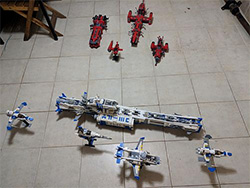 Nothing beats the empty vacuum of space for ease of Battlefield setup. In space campaigns, Battlefields and even Headquarters are often capital ships rather than stationary locations on the ground.
In order to stage the combat, players build a model of the Battlefield at minifig scale, making sure to include all the elements described on the Battlefield Card (if any) or required for an Escapade (if any). Each point of Production requires the construction of a Facility with attendant Workers and loot items (11.3: Resource Production), and appropriate defenses must be built to match the Battlefield's Fortification number (11.4: Fortified Defense). If it's the first time the Battlefield has seen combat, players are free to design and construct it however they like, with the defending player (if any) given final say over the details and layout. The size and difficulty of the terrain should allow units to close to combat distance with each other in the first turn, based on the general movement and attack abilities of the units in the Factions' Armies. If the Battlefield has been the target of earlier Offensives, then players should try to match the earlier layout, using models and scenery saved from the previous battle if possible. A Battlefield is rarely exactly the same as the combatants left it, however. The Battlefield's owners continue developing Production and Fortification infrastructure between Offensives, and life goes on for the Battlefield inhabitants. Damaged buildings may have been repaired or abandoned, and monuments and memorials to past victories and losses may have been built. New families, businesses, and nomadic herds of velociraptors might have moved in or fled for safer areas. Missing Workers and stolen resource loot replenish themselves as long as their Facility is still functioning and Production isn't disrupted, but damaged Facilities are only repaired if the Faction paid the Glory cost to remobilize their Production. As long as the Fortifications weren't destroyed completely, the local population automatically repairs damaged sections with whatever materials are available from the Faction's Production resources. Attackers, Defenders, and Meddlers Once the Offensive Faction has declared its Offensive for the turn, the other Factions in the campaign decide their allegiences for the battle. With the Offensive Faction's approval, other Factions can join the Assault as its allied attackers for as long as they can resist the lure of Inevitable Betrayal (MC.3: The Benny). If the Battlefield under assault or the loot targeted for a Heroic Escapade belong to a Faction, it becomes is the defending Faction in the battle. Where the Offensive Faction is the star of the show, determining the disposition of the attack and the allies supporting it, the defending Faction is the co-star with similar leadership of the defense effort and its supporters. With the defending Faction's approval, other Factions can join the battle as allied defenders, tempted by Inevitable Betrayals of their own. Factions not aligned with the attackers or defenders can take part in the battle as meddling Factions, taking advantage of the violence to pursue their own agendas. Picking Edges When laying out the Battlefield, if it has Fortifications, players designate the Fortified area first. They then pick which edges of the Battlefield belong to the attackers, the defenders, and the unaligned meddlers.
Loot items and equipment can only be claimed by a Faction if they're carried off their own edge of the Battlefield by active units. Objects that exit the Battlefield by other means don't end up in the possession of any Faction, regardless of whose edge they exited on.
The edges for the Offensive Faction and defending Faction never move during the battle, but other Factions can find their friendly edges shifting as they make or break alliances with either side. Mobilizing Units The types of units a Faction can send to a battle depend on how motivated it is. A mob of minifigs waving swords and pistols around requires a relatively small logistical effort to deploy compared to a similar-sized force of orbital battle cruisers with supporting triceratops cavalry. Defenders in a garrison are mobilized by the Battlefield's points of Fortification. For all other forces, Factions will need to spend bricks of Glory (for attackers and meddlers) or Sacrifice (for defenders) in order to send units to the Battlefield. Even if the Defensive Faction already has units in the garrison, they may wish to spend Sacrifice bricks to send additional non-garrison forces. These forces arrive from the defenders' edge of the battlefield rather than starting inside the Fortified area.
The maximum Size inches of any garrisoned unit is equal to the Battlefield's Fortification level. The maximum Size inches of any unit sent to the battlefield is equal to the number of Glory or Sacrifice bricks the Faction spends to mobilize them. A Faction spending two Glory bricks on an attack, for instance, can send as many Size 1" minifigs and Size 2" cavalry as it wants, but it can't send a single Size 3" armored vehicle. If a Faction doesn't have any of the needed Glory or Sacrifice bricks to spend, but still wants to send units to the battle, it's treated as if it had spent one brick. Even without Factional loyalty motivating them, minifigs stand eternally ready to jump on opportunities for violence. Attacking Factions
The Faction staging the Offensive is the protagonist of the campaign round, and the size and scale of the round's battle are based on how many Unit Inches' worth of forces it deploys. If there are other attacking or meddling Factions in the battle, whether allies supporting the main Offensive or rivals Koincidentally arriving at the same moment with their own agendas, the Unit Inch values of their individual forces can't exceed that of the main Offensive Faction. Defending Factions The defending Faction's forces aren't limited by the Offensive Faction's Unit Inch value. It can field as many or as few units from its Army as its Fortification and Sacrifice allow, but its decision will affect which side starts the battle with underdog Bennies. If the defending Faction is supported by allied defenders, the Unit Inch value of each individual ally's forces can't exceed that of the main defending Faction. Underdogs Whether out of defiance, desperation, or respect for dramatic tradition, minifigs fight even harder when they're outmatched. Underdog Factions go first in the turn order and start the battle with Bennies in proportion to their numerical disadvantage. While Bennies are no replacement for units on the ground, they give an underdog Faction extra flexibility to do more damage with fewer numbers. When all Factions have selected their forces, the players write down their starting Unit Inch values. They'll need these at the end of the battle to assess the severity of their losses and collect rewards in proportion to their lack of self-preservation. But before then, these Unit Inch totals can be compared to determine whether the attackers or defenders are the underdogs in the fight. The Offensive Faction and its allies calculate the sum of their deployed Unit Inches, and the defending Faction and its allies do the same. Whichever of the two sides has fewer total Unit Inches deployed is the underdog. An underdog Offensive or defending Faction receives a number of underdog Bennies equal to the difference between the two totals, which they can spend over the course of the battle or allow their allies to spend as needed. No matter how large the imbalance of power, the number of underdog Bennies an Offensive or defending Faction can receive is limited to the Unit Inch value of its own forces, not including its allies. If there are no defenders, then the Offensive Faction automatically has the most Unit Inches' worth of forces. All Factions not allied with the Offensive Faction receive underdog Bennies equal to the difference between the Unit Inch value of their own forces and the Offensive Faction's. Deploying Forces 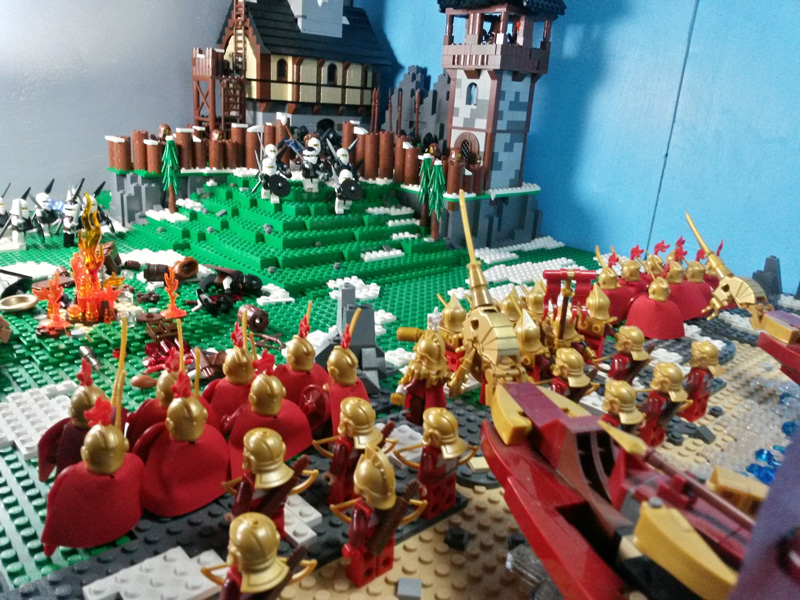
An Esduin invasion force deploys on the shoreline of the Upper Norselands as alarmed Frostborne defenders mobilize in the Fortified garrison.
Tactical Advantage If a Faction would like to leverage its tactical expertise for a more favorable deployment, all Factions fielding a Command Specialist in the battle can pick one of them to make an Action Roll (11.7: Command Units), increasing the die size by one if they're also fielding one or more Scouts. (If the Defensive Faction has both a garrison force and a force sent with Sacrifice points, each force rolls separately.) The Faction with the lowest roll must choose and deploy its forces first, and the other Factions choose and deploy their forces in order of increasing die rolls. If a Faction critically fails this roll, or if it isn't deploying a Command Specialist, their highest-rolling enemy may swap the locations of any two of their deployed units of similar Size and Propulsion type. If a Faction's roll is at least twice as high as all of its enemies' rolls, then it can set up an ambush. After all other Factions have set up their troops, the ambushing Faction can place its units anywhere on the battlefield except for inside an enemy formation, Fortified area, or Facility. Deployment Rush The more motivated a force is, and the lighter its units, the faster it can mobilize. If the largest unit in a sent force is smaller in Size inches than its Faction's Alert level, the force can make a rush, moving and acting before their heavier opponents are ready. When one or more forces makes a rush, an extra rush turn takes place at the beginning of the battle. Factions take their turns in regular turn order, skipping garrison forces and forces with units too large to take advantage of the rush. After the rush turn, the battle continues with regular turns again. 13.4 The Spoils of Battle When players decide the battle is over, whether because there's a clear victor, because it's clear there won't be one, or because it's time to wash up for Human dinner, all players collect their surviving units and captured loot to start the Development phase for the campaign round. Courteous Factions holding on to units or loot items taken from an ally may choose to return them now. Factions are not required to be courteous.
All units still active on the Battlefield when players declare the battle over are assumed to have survived, unless their Faction chose the Suicide Run option when Fighting a Losing Battle. Players may agree among themselves that some situation was so dire that no minifig could have survived, but as a general rule, nothing tactically interesting happens to minifigs after their Humans stop paying attention, no matter what kinds of cliffhangers the battle ends on. After comparing its surviving forces to the forces it brought to the battle, each Faction collects Sacrifice bricks and hands out Glory bricks based on its losses and who best inflicted them (C.2: Glory and Sacrifice). These can be spent immediately on Battlefield development, spotlighting new Battlefields and adding new levels of Production and Fortification (Chapter 11: Battlefields). The new Production can be used immediately to build, repair, and upgrade units and Fortifications, and Facilities with lost Workers or resource loot items replenish themselves from the local supply. These generic rewards advance the campaign in their dull, plodding way, but they hardly compare to the draw of grabbing fabulous loot and running off with it. Fabulous Loot The best part of finishing a battle is counting up all the fabulous loot. Loot items are claimed by a Faction when its units escape with them over a friendly edge of the Battlefield, when it's in control of the items when the battle ends, or if it takes control of the Battlefield completely. Depending on the campaign fiction and the players' mutual agreement, some loot might be claimed upon completion of a story-specific task instead - defeating a boss enemy, activating a series of control panels, or feeding the tastiest member of the royal family to a dragon, for example.
| ||||||||||||||||||||||||||||
|
|
|
 Budget
 Glory
Glory Size inches of largest unit sent
 Alert level
 Sacrifice
 Fortification level
 When determining whether a unit can participate in a battle, only its actual Size is considered - not its Effective Size or Unit Inch value. A player attacking with a single Glory point can send their 1" Hero, even though he's worth two Unit Inches, but can't send their 2" wounded Horse, even though its wound brings its Effective Size down to one inch.
 When counting up a force's Unit Inches before and after a battle, unrepaired damage can affect a unit's value. Each inch of Size Damage reduces a unit's value by one Unit Inch, to a minimum of 1Ű.