|





|
|
|
|
|
Chapter S
Minifig Specialists
Every great civilization has learned through bloody experience to maintain a standing Army of military professionals. These dedicated soldiers are the men, women, animals, droids, and miscellaneous extras who risk their lives (and the lives of as many innocent bystanders as possible) to destroy as much enemy property as they can in the name of their arbitrarily-assigned Faction membership. S.1 Specialist Roles A fully-developed minifig military has a number of defined Specialist roles, from basic Workers and Skirmishers to highly trained Mediks and Snipers. Each Specialist has his part to carry out, from the Cannon Fodder on the front lines jumping on grenades to protect the vital strategic doughnut reserves, to the Commander back in mission headquarters performing vital doughnut consumption activities.
except where noted, all minifig Specialists have
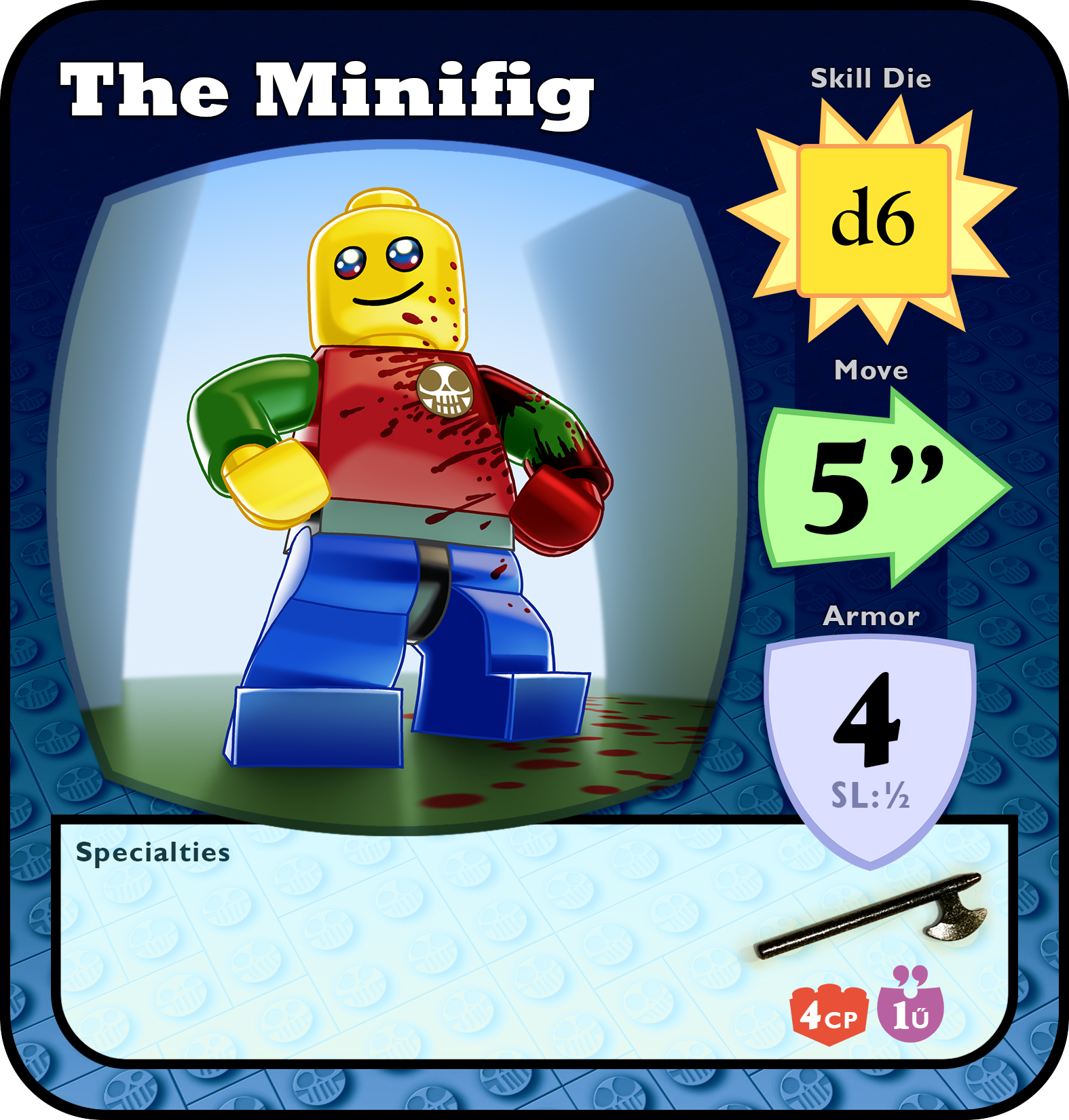
 Action: Action:  , ,  Move: 5", and Move: 5", and  Armor: 4, and are worth Armor: 4, and are worth  1Ű. 1Ű.* a CAP marked with an asterisk is required equipment for the Specialist. ** a Rider or Pilot is counted as part of his Horse or Vehicle, with no Unit Inch value of his own.
A handful of minifig Specialist roles have already been introduced in previous books: the Hero and Rider in the Core Rules, and the Mechanik, Gunner, Pilot, and Medik in MOC Combat, each with rules for their respective Specialties. As the mission objectives made up by Human players become ever more gratuitously convoluted and contrived, a minifig military requires a wider range of Specializations to keep up. New players should feel no obligation to add these advanced Specialists to their first few battles. If they do, they should limit themselves to one or two. While each is relatively simple on its own, the extra Specialty rules can add up quickly for players who aren't used to the system yet.
Field Promotions A Faction Army can start with whatever Specialists its player feels are appropriate. Once a campaign has begun, under normal conditions, a Faction that wants to add more Specialists to its Army will need a dedicated training Facility for that Specialty along with an available minifig to train. There's one way around this requirement: Even without proper training and certifications, a minifig can rise to a Specialty role through equivalent combat experience. Luckily, minifig training standards are laughable to begin with, and it doesn't take more than one or two stupid decisions in combat to exceed them. Minifig Specialist roles are divided into seven categories: Civilians, Infantry, Operators, Support, Elite Units, and Command, each with its own narrative, described in the chapter sections below. If a minifig meets the requirements of a Specialist narrative in a memorable enough fashion to impress the players, he can receive a Field Promotion to that role if he survives the battle. Nitpicking readers may complain that only six Specialist categories were listed. The seventh is Covert. You can't see it.
CAPITALISM In the scramble of rapid mustering and deployment, minifigs have limited time for paperwork. Rather than tracking which minifigs have which Specialist roles according to entries in an Army accounting spreadsheet, it's easier to base a minifig's Specialty on his equipment loadout, using a property-based system of CAPITALISM.
Under CAPITALISM, minifigs aren't defined by anything so esoteric as their thoughts or souls or what's in their hearts. Like Humans, Minifigs in a CAPITALIST system have no identity or value apart from their material possessions, and they're not just willing but eager to sacrifice the lives of friends and family for sweet, sweet meaningless items.
CAPITALIST minifigs are sorted into jobs based on their uniform and equipment. A scientist doesn't become a scientist by wasting time studying in some school or laboratory. He's a scientist because he has a lab coat. A Hero is a Hero because he has a cape, a Heavy is a Heavy because he has a weapon that's Too Big, and a galaxy-spanning space civilization's Divine God-Emperor is granted his title and authority as a side benefit of having the fanciest hat. The piece of clothing or equipment that determines a minifig's role in life is his Career Assignment Piece, or CAP. Once a minifig receives his CAP, he's stuck with the job it assigns, even if he scavenges different equipment later or loses his own CAP through misadventure or criminal sentencing. (De-CAPitation is the harshest form of CAPITAL punishment). Luckily, lost CAPs are easily replaced during the development phase at the end of each campaign round. A CAP can be any item, from a pair of binoculars (making its owner a Scout) to a jet fighter (making its owner a Pilot). For most Specialist roles, the CAP is required equipment, and they must have it with them at the beginning of any battle. For others, the CAP is just a convenient marker to distinguish them from other Specialist types, and can be replaced with any other identification system that the players find convenient. Players should feel free to make up their own CAPs according to their available brick collections and desired military theme. Tool-based CAPs act as a kind of Half Power Impairment to balance a Specialty's advantages. By occupying one of the minifig's Hands, a tool or equipment requirement cuts the minifig's weapon capacity in half.
S.2 Civilians
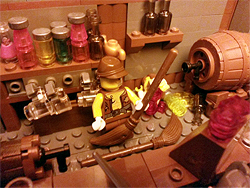 Janitors and secretaries are the most dangerous employees in any Civilian organization.
For minifigs, the blood, gore, and agony they inflict on their opponents is only half the fun. Piles of steaming enemy corpses are appetizers in anticipation of the main course of terror, disfigurement, and lifelong psychological trauma that they can bring about by staging battles in the midst of innocent and unsuspecting Civilian populations. Civilians will almost never have any serious effect on the outcome of a battle (unless one of the Heroes refuses to fight until he gets some sushi, in which case his faction had better hope one of the local Professionals is a SushiChef). Civilians exist only to add casual casualties and a light-hearted body count, so there's no need to stress out over how their initial placement and control are handled. Players can just go with whatever their playing style suggests. The Civilian Round Unless there's an extra player who wants the task of controlling the Civilian population, the simplest way to handle them is to place all Civilian minifigs, Vehicles, and buildings as free scenery during battlefield setup. At the end of each round, after all players have taken their regular turns, they take a Civilian Round during which all players (regardless of whose "side" the Civilians are on) control the Civilians by Mob Rule (MC.5: Endgames), taking turns picking an unused Civilian and directing him through his everyday mundane tasks. The Civilian Round can serve as a useful break to relax, step out to hit the refrigerator or bathroom, or explore the complex soap-opera melodrama of common Civilian lives in between rounds of more directed violence. Civilians may occasionally form small armies of armed rabble, if the military's misbehavior gets them riled up enough. Civilians may sometimes even receive assistance from unaffiliated soldiers with whom they have shared pizza or nachos in the past. It can sometimes be fun to play out battles in which one or more armies has a large Civilian component, just to watch the Civilians get blasted to bits in the course of their futile attempt to make any difference whatsoever. The Civilian
Specialty: Civilized units are controlled by Mob Rule A minifig suffering from the Civilized disability has very little ability to act in his own self-interest or follow through with consistent plans. Players use Mob Rule to take turns controlling as many Civilized units as they can stand to during a special Civilian Round. The Professional
Specialty: Job Training improves Action die to
Job Training makes a Professional slightly less incompetent, using his Specialty for specific job-related tasks instead of his usual Action die for any job-related tasks. A Barista Professional, for instance, has a Civilian's regular d4 Action for non-coffee-related tasks, but a for operating an espresso machine, overcharging customers, and dodging awkward pick-up lines from hipster coffeeshop deadbeats.The Professional is still subject to a Civilian's Civilized handicap; players take turns controlling Professionals in the Civilian Round along with all the other Civilians. S.3 Infantry
Infantry is the heart and soul of all BrikWars armies. An army's infantry units are responsible for operating the weapons and machinery of war, keeping score with their own accumulating corpses, and enjoying the spoils of victory in the rare instance that any of them survive. It's possible, although inadvisable, to field infantry-free armies made up of automated machinery or strange otherworldly beings. But without a host of fighting minifigs with hopes and dreams to see crushed and splattered across the landscape, the exercise falls flat. Conveniently, the hopes and dreams of fighting minifigs are almost entirely concerned with splattering each other across landscapes, and so any ensuing splattery tends to be a satisfying experience for splatterers and splatterees alike. The Minifig (Chapter 2: The Mighty Minifig)
.The Worker
Specialty: Job Training improves Action die to
Like the Professionals, Job Training lets a Worker roll his Specialty for specific job-related tasks rather than his regular Action die for any job-related tasks. Unlike Professionals, this enhanced Action is used for the benefit of the Worker's faction rather than for screwing around uselessly in the background.Whenever a Worker isn't actively engaged in job-related tasks, he's prone to Stupidity like any other Incompetent unit. The Cannon Fodder
Cannon Fodder can be set up with Spawners to respawn endlessly, because sometimes it takes multiple incarnations to really hammer home their disposability. Specialty: Irrelevant attacks do 1 point of Damage; Actions never go Over the Top; Effective Size 0" for many purposes; unit can Respawn endlessly but it doesn't matter
Cannon Fodder are Irrelevant. Their Actions never go Over the Top, and their attacks never do more than one point of Damage. The single point is enough to kill other Cannon Fodder and the occasional Size 0" Vermin, but it's largely ineffective against real targets unless used in Combined Fire with real minifigs operating real weaponry. Cannon Fodder (along with Vehicles or devices operated solely by Cannon Fodder) have zero Momentum Dice, zero Physical Opposition, zero throwing ability, and can Shove for a grand total of zero inches.Cannon Fodder come equipped with one Ranged or Close Combat Mook Weapon, which are just as Irrelevant as the Cannon Fodder. Even if regular minifig picks up a Mook Weapon, it still does a maximum of one point of Damage. When a Cannon Fodder is killed, he and his Mook Weapon can be left where they fall or removed from the battlefield, and no one notices or cares. Their corpses may flash in and out a few times before fading away, or turn upside-down and fall off the bottom of the screen while a point total rises above their place of death. On the following turn, a new, identical Cannon Fodder can appear in a designated Spawner area, and nobody notices or cares about that either. They're just that Irrelevant. Depending on the players' tolerance for more Cannon Fodder, a player can set up one Spawner area for each Cannon Fodder in their army. These might take the form of a barracks tent, a teleportation portal, a troop transport, or a summoning pentagram. Spawners operate according to plausible deniability - as long as enemies can't prove that there aren't any more Cannon Fodder inside, there are always more Cannon Fodder inside. As soon as an enemy unit either touches or damages the inside of a Spawner, however, the Spawner is "cleared" and no more Cannon Fodder can emerge from it. The Skirmisher required item: any one-handed weapon
Specialty: Harassment unit can Withdraw from Close Combat freely without drawing Counterattacks
A Skirmisher has professional Harassment training, allowing him to Withdraw from Close Combat freely after making a single one-Handed attack.As long as he Withdraws to a distance outside of the reach of his opponents' Close Combat weapons (including any Angry Inches), he escapes consequence-free, without drawing the usual Counterattacks.Skirmishers only use one-handed weapons and equipment. A Skirmisher who equips larger items, or whose movement is reduced to Half Speed for any reason, is unable to use his Harassment ability and must suffer Counterattacks as normal when Withdrawing. The Scout required item: any Optics Tool
(F.3: The Scout)
Specialty: Pathfinding  Action when rolling vs. Field Hazards; stops safely before setting off Concealed Hazards for self and others for any Action Roll involving a Field Hazard or Trap. Action when rolling vs. Field Hazards; stops safely before setting off Concealed Hazards for self and others for any Action Roll involving a Field Hazard or Trap.When traveling or leading other units in single file through a Concealed Hazard, the Scout rolls his to see how many inches they can safely travel during the turn. He can then stop at that distance without setting off the Hazard.Specialty: Tracking automatically detects hidden or invisible units, Traps, and Triggers; allows Marking of a target for allied visibility and a +1 Action Bonus to Ranged Attacks
A Scout also has the Tracking Specialty. A Scout's intense paranoia allows him to see all hidden or invisible objects within his field of view, including units, Traps, and Triggers. Any unit or target visible to a Scout is also visible to all allied units, even if they don't have a line of sight to the target. Tracking allows a Scout to spend an Action to Mark a single target within 8" that he can see. Until the beginning of the Scout's next turn, the target is considered visible to all allies, and they recieve a +1 Action Bonus when making Ranged attacks against it. The Phalanx required item: a Heavy Shield
Specialty: Shield Wall units can cooperate to form a Shield Wall, automatically Parrying all Damage from one direction
If a Phalanx minifig is in formation with one or more other Phalanx minifigs, all with Heavy Shields pointed in the same direction, then they have formed a Shield Wall. While protected by a Shield Wall, all Damage from the other side of the Shield Wall is automatically Parried, without spending any of the minifigs' Actions or Counters. Individual Phalanx minifigs can't use their Shields to Parry damage from any other direction without breaking the Shield Wall.When fighting in a Squad protected by a Phalanx's Shield Wall, minifigs in Squad Close Combat cannot be forced into a Full Engagement. If they are forced into a Full Engagement from an attack on one of their non-Shield-Wall sides, or if they choose to drop the Shield Wall and enter into a Full Engagement voluntarily, the Shield Wall is broken and any Shield Wall benefits are cancelled for as long as they are in Full Engagement. A Phalanx can open and close a Shield Wall very quickly in order to let allied units pass through unhindered without losing their Shield Wall advantages. A group of Skirmishers coordinating with a Phalanx can be great for popping through a Shield Wall to Harass enemies on the other side before escaping again. Specialty: March units Marching in formation ignore Movement penalties from Heavy Armor while walking
If a Marching minifig is in a Squad with at least one other Marching minifig, they can March in formation, walking at normal speed and ignoring Movement penalties from Heavy Armor. Marching is walking only - units cannot jump, Sprint, or climb in the same turn as Marching, although they can still Bail if necessary. Marching does not cost an Action.The Marksman required item: a minifig Long-Ranged Weapon
Specialty: Aiming can Aim a Ranged Attack as a Full-Round Action, using a Specialty
Marksmen have the Aiming Specialty, granting them a Specialty to replace the Action Roll, replace a Damage die, or to add inches to Range they can use to increase the effectiveness of a Ranged Attack.When Aiming, a Marksman can make a single Ranged attack with a Short- or Long-Ranged Weapon, or an AutoGun set to single fire. Aiming is a Full-Round Action; the Marksman can turn to face in a new direction, but he can't use any Move inches during the turn. As long as his Aiming isn't interrupted (a single point of Damage or inch of KnockBack is enough to ruin a Marksman's Aim), the Marksman can use his Specialty to either replace his Action die for the Action Roll, replace one of the weapon's Damage dice, or add inches to the weapon's Range. The Sniper required item: a minifig Long-Ranged Weapon with a scope attached
Specialty: Sniping can Snipe with a scoped Long-Ranged Weapon as a Full-Round Action, Automatically Hitting targets at least 5" away
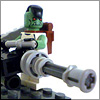
As a Full-Round Action, a Sniper can Snipe with a scoped Long-Range Weapon. The weapon must have a physical scope built onto it, even if the Sniper has to steal a Scout's Optics Tool and a Marksman's Long-Ranged Weapon and combine the two himself.When Sniping at a target five inches away or more, the Sniper doesn't have to make an Action Roll - every shot is an Automatic Hit, no matter how ridiculous or unlikely. The Damage can still be affected by Out of Range penalties, and RedShirts can still intercept the shot, but the Sniper's aim is always perfect. Like an Aiming Marksman, the Sniper can't use any Move inches during the turn, and his Sniping abilities are canceled if he's interrupted. Because his field of view is so constrained, he's treated as an inanimate object while Sniping, and he can't Parry enemy attacks or make Response Actions of any kind. The Heavy required item: any Too Big weapon
Specialty: Compensating when standing still, can use Weapons 1" larger than normally allowed
Whether due to superior strength, coordination, or the superhuman determination that rises from crippling insecurity, Heavies are able to wield larger weapons than other minifigs thanks to their Compensating ability. As long as a Heavy doesn't use any Move inches during the turn, he can lift, operate, and throw objects 1" larger than usual, and he's treated as having a Size of 2" when resisting Grabs, Shoves, and Collisions.Most often, Heavies use Compensating to weild and fire a 2" Ranged Weapon, but it also allows the use of larger Close Combat Weapons. A Compensating Heavy can wield Heavy Weapons as if they were Hand Weapons, Two-Handed Weapons as if they were Heavy Weapons, or a Size 3" Melee Weapon as if it was a Two-Handed Weapon. S.4 Operators
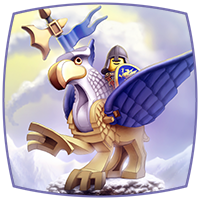
Minifig-level units running around generously gifting each other with horrible injuries and death are the easiest for Human players to empathize with, but they're far from the most powerful. Siege-level Vehicles, Weapons, and steeds bring the heavy piles of dice, and all of these larger Creations benefit from the Actions of specialized minifig Operators. An Operator is often treated as a part of whatever he's Operating, with identity outside of the Creation he's in charge of. As long as they're worth at least one Unit Inch, Vehicles and Half-Minded Creatures that require an Operator receive one for free. The Rider required item: a Horse or other steed
(H.2: Riding a Horse)
Specialty: Horsemanship can control a Horse and make attacks from horseback as part of a single Action
Where lesser minifigs have to choose between either controlling their steed's Movement and weapons or fighting with their own minifig weapons in hand, a Rider has the Horsemanship to do both at once, as naturally as if they were a single unit. In Close Combat, Riders and their mounts can Counter and take attacks for each other at will.When a Action Roll is called for, the mount always uses the Rider's Action die, regardless of whose is larger. The Pilot required item: any Vehicle
(9.4: Piloting)
Specialty: Stunt Driving once a turn, defy a controlled Vehicle's Movement limitations for up to
Even compared to other minifigs, Pilots lack any sense of self-preservation. Once per turn, a Pilot can harness this advantage to violate the laws of both physiks and courteous driving to pull off a Stunt Driving maneuver. Stunt InchesThe Pilot declares the Stunt he's about to pull, measures how many inches this will push the vehicle beyond its sane performance limits, and rolls his Specialty . If the number rolled is equal to or higher than the number of Stunt inches needed, then the Stunt is successful.If not, then the number rolled is the numer of inches for which the Stunt succeeds, and the remaining inches are given to an enemy player to use as Thrust against the vehicle while the enemy explains how the Stunt failed disastrously. The Gunner required item: must be assigned to a mounted weapon
(8.6: Manning Guns)
Specialty: Gunnery Action
For any Action Roll related to the use of a Weapon mounted on a Creation, Gunnery allows the Gunner to roll his Specialty with mounted weapons; allows Gunnery Support Action rather than his regular Action die. Gunners can spend their Actions to provide Gunnery Support to another unit operating a large Weapon, granting cumulative +1 Attack Bonuses to fire. The number of minifigs in the firing team (the firing minifig, plus the minifigs providing Gunnery Support or Assistance) is limited to the number of inches in the Size of the Weapon, and each minifig must be able to access the Weapon or a working set of Controls for it. As long as the Weapon keeps firing at the exact same point, and neither the Weapon or the target move, the Attack Bonuses from Gunnery Support continue until the Weapon moves or aims somewhere else. Each turn that the firing team fires the Weapon at the same target, they can Home In, adding additional Gunnery Support to the continuing Attack Bonus from the previous turn. Any Critical Failure cancels the Homing In bonus and requires the Gunners to start over. S.5 Support
Fighting battles is hard work, and all elements of a military force can use some Support. Whether stapling misplaced limbs back onto soldiers, bolting misplaced thrusters back onto rocket ships, or mixing things up and duct-taping misplaced rockets onto the soldiers to make rocket soldiers, Support units are on the job to restore units' capacity for aggression in order to keep violence flowing freely. The Specialties of most Support Units depend on a successful Construction Action (7.3: Field Construction). To initiate a Construction Action, a minifig spends an Action and immediately goes On Break, doing nothing else for the rest of his own turn. From the end of that turn to the beginning of his next turn, the minifig can do their Specialty work during the time when any opponent is taking their turn. Mechaniks build new Creations, Engineers modify existing ones, Mediks perform improvised surgeries, and Cybernetiks commit crimes against nature. At the beginning of the Specialist's following turn, or whenever they're interrupted by Damage, Disruption, or death, their Construction Action ends immediately and they're stuck with the results of their labor. The Tek required item: must be assigned as an assistant to another Specialist
Specialty: Assistance use Action to boost another Specialist's Specialty die
A Tek's job is to give Assistance to other Specialists, increasing their Specialty die by one die size. With a Tek's Assistance, a Medik's Ker-Triage! Roll or a Mechanik's Construction Action can be made with a  rather than a , for example. rather than a , for example.Assisting other units costs the Tek's Action, and the Tek must be within arm's reach of either the Specialist unit they're Assisting or the target of their Specialty die roll. Only one Tek can assist with any Specialty die roll. Teks cannot give an Assistance bonus to Commandos. The Mechanik required item: a Mechanik's Tool
(7.3: Field Construction)
Specialty: Mechanikal Aptitude allows a Construction Action to build or repair Creations on enemy turns within a radius of
Using Mechanikal Aptitude, a Mechanik with an appropriate Mechanik's Tool in hand can use his Action to declare a Construction Action. At the end of his turn, while opposing players are taking their turns, the Mechanik gets to work. The Mechanik makes a roll on his Specialty inches, and can use any loose bricks and parts within that many inches to build, repair, and modify Creations.Newly-built objects are Field Constructions, with a Size equal to their physical size in inches, a Weight class of ½ and Armor of 1d6, and a Move of 2" per usable Propulsion element. Stats for weapons and other devices are based on their apparent type and Weapon Size, but may be subject to negotiation among the players. Mechaniks can also use a Construction Action to build continuous Patches of bricks on an object to perform Patch Repairs, repairing a damaged object's Size Damage. To reduce Size Damage by one inch, the Size of the Patch must be one inch larger than the object's current Effective Size. The third use of a Construction Action is to Dissassemble Creations, allied or otherwise. Rather than collecting new bricks, the Mechanik stands next to the object to be taken apart, and gets to work. At the beginning of his next turn, if he was able to work on the object continuously without interruption, the Mechanik rolls his Specialty . If the roll is higher than the object's Weight class, then the Mechanik can immediately detach that many construction elements, up to 1" in Size apiece, or a single construction element up to that many inches in Size. Otherwise, the object was too difficult to take apart right away. The Mechanik can continue to attempt Disassembly on subsequent turns.The Engineer required item: an Engineering Tool
Specialty: Rationalism allows a Construction Action to Rationalize
No matter how misguided, counterproductive, or insane the Engineer's ideas may be, his Technical School training ensures that they will always at least be Technically Correct. Thanks to atomistic reductive problematization, punctilious obfuscatory jargonizing, and a slavish fetishization of the ill-advised meddling that derives therefrom, the Engineer is able to "solve" any problem with the power of Technobabble (or his culture's verbal equivalent). Engineers and internet debaters alike call this technique Rationalism, and will happily list a hundred reasons explaining why the entire rest of the world is wrong in thinking there's nothing rational at all about it. modifications to existing objects and devicesUsing a Construction Action, an Engineering Tool (usually coffee), and the power of Rationalism, an Engineer can Rationalize performance tradeoffs that make no logical sense, rerouting a Specialty from the samoflange distributors to the subspace induction processor core in complete contravention of the warranty and the laws of Physiks, and with no regard for whether the object has samoflanges or subspace induction to begin with.
In order to properly Rationalize a performance shift, an Engineer must have an Engineering Tool and access to the working parts of the device he's Rationalizing. He declares his Technobabble justification, selects one enhancement and one impairment from the Rationalizations table, and takes a Construction Action. At the beginning of his following turn, if his Construction Action wasn't interrupted, the Rationalization is successful, and the enhancement and impairment are both applied. He removes one or more pieces from the Rationalized object and attaches them to a different part of the object, to show that it's been modified. (If the object doesn't have removable pieces, he can add a new element at random.) Neither the Technobabble nor the modifications are required to make any sense whatsoever. If the Construction Action is interrupted, then the Rationalization is incomplete. The Engineer removes one or more pieces from the object and does not reattach them. The object now has the impairment applied, but not the enhancement. Incomplete Rationalizations can be completed and existing Rationalizations reversed by Engineers with another Construction Action. They can also be destroyed by Component Damage to the moved pieces, canceling the enhancement but leaving the impairment in effect. A Creation or device can only have one Rationalization at a time, but Engineers can switch the enhancements and impairments around at will with new Construction Actions. Rationalizations are reliably unreliable. As long as the Rationalization is intact, the enhancing and impairing s are rolled again every time the devices are used.The Medik required item: a Medikal Tool
(10.2: The Medik)
Specialty: Ker-Triage! allows a Construction Action to roll
on the Ker-Triage! Table to revive fallen minifigs and Creatures
In the heat of battle, there's no time to mend wounds or heal injuries. Thankfully, literal weeks of Medikal training allow a Medik to perform Ker-Triage!, instantly assessing the number of limbs he needs to amputate to get a fallen minifig or Creature back into combat and fighting again. When operating on a fallen minifig or other Creature, the Medik takes a Construction Action and begins operating. At the beginning of the Medik's next turn, if his Construction Action wasn't interrupted, he rolls a (if he's using a proper Medikal Tool) or a (if he's improvising with a bladed weapon or other cutting tool) and amputates the number of arms, legs, and/or heads indicated by the Ker-Triage! Table. If the patient loses its last remaining head, then it's permanently dead and no further Ker-Triage! can save it. Otherwise, the Creature can jump up with whatever limbs it has remaining and take its Movement and Action as usual on its following turn (or immediately, if the Medik rolled a six or better). Minifigs and minifig-sized Creatures are brought back up to full strength, minus whatever limbs they lost in the process. Larger Creatures are brought back up to an Effective Size of 1".If the Medik's Construction Action is interrupted, he still makes the Ker-Triage! Roll and removes the number of limbs indicated, but the patient is not revived. As long as the patient still has at least one head, the Medik may continue attempting Ker-Triage! on subsequent turns. The Cybernetik required item: a Science Utensil
Specialty: Mad Science allows a Construction Action to combine mechanikal and biologikal creations within
Using Mad Science and a proper Science Utensil, a Cybernetik can declare a Construction Action to begin combining mechanical and biological parts in direct contravention of minifig decency. His Construction Action is similar to a Mechanik's, except that he can only attach biological parts to mechanical ones, and vice versa. He will never attach machine parts to machines, or biological parts to biology - not because he lacks the skills, but to do so would go against his code of violating ethiks (and against the strict trade agreements imposed by the Mechaniks' Union and Mediks' Association). inchesDuring a Mad Science Construction Action, a Cybernetik can utilize and combine all loose mechanical and biological parts within inches. He can, for instance, add an antenna to a decapitated soldier's neck to control the body by remote, and attach the soldier's head to a hot dog cart to give it a Mind of its own. He could graft the hot dog cart's wheels to the torso of the hot dog vendor to replace his amputated legs, and graft the hot dogs onto the soldier's assault rifle for no reason whatsoever. The resulting monstrosities receive the same stats as a Mechanik's Field Constructions (7.3: Field Construction), with any newly reanimated Minds treated as Incompetent ( ) and suffering from Stupidity (10.1: Minds). ) and suffering from Stupidity (10.1: Minds).S.6 Elite Units
When it comes to the minifigs whom all the other minifigs wish they were, it's not the minifigs making the strategic decisions. It's the minifigs who ignore those minifigs' decisions and spend the battle doing (and wearing) whatever they want. Elite units are answerable only to themselves, despite what their so-called superiors may think. The Commando
Specialty: Field Training can copy any ally's Specialty marked with a Specialty die, using a Specialty die one size smaller
A minifig going Commando is much less restricted than other Specialists. Thanks to his independent nature and extensive solo Field Training, the Commando has enough field knowledge of his allies' major Specialties to strike out on his own and not have to put up with any of them. He has a basic familiarity with any of their Specialties marked with a Specialty die, but not a mastery of any of them - when he copies a Specialty, he uses a Specialty die one size smaller.The Commando can only copy Specialties that were possessed by at least one of his allies at the beginning of the battle. Otherwise, his teammates don't know the techniques, so he never had a chance to copy them. An army that sends a Cybernetik into battle has proven that they're familiar with Mad Science and that they think it's an important battlefield capability; it makes sense when their Commando tries his half-assed Mad Science on his own. By contrast, in an army without a single Engineer and his Rationalism , a Commando can't suddenly reveal a skill in Rationalism .Tek minifigs can't use Assistance to improve a Commando's copied Specialties. If Commandos wanted to accept help from a teammate, they wouldn't have become Commandos in the first place. The Hero (Chapter 6: Minifig Heroes)
Specialty: Heroic Ego (+1 )can take one Heroic Feat per turn appropriate to his Cliché; can inspire nearby friendly units (within an Action Roll worth of inches) to RedShirt and take Damage meant for the Hero; becomes Cranky in the presence of other Heroic units or items
Rules, restraints, and logik are beneath the Hero and his massive Ego. Once per turn, he can ignore them completely in a Heroic Feat appropriate to his Heroic Cliché, and more often than not, they'll ignore him right back. The Hero's player declares the Feat and its results and rolls 1d6. One opponent offers their competing idea about what the results of such an attempted Feat would be, usually much less favorable to the Hero, and also rolls a 1d6. If the Hero's player rolls higher, or if the rolls are tied, then the Feat succeeds. If the opponent rolls higher, than the Feat fails, with whatever consequences logically result.Taking Damage is also beneath a Hero, who has neither the time nor the inclination to bleed. When a Hero is about to be struck by incoming Damage, the Hero rolls his Action . If there's an allied unit within that many inches, they become a plot-convenient RedShirt and jump in the way instead, knocking the Hero out of the blast radius if necessary.Of all the things that are beneath a Hero, sharing a battlefield with Heroic teammates is the beneathest of all. Enemy Heroes are good for killing, and Heroes on allied teams are good for dramatic betrayals, but another Hero on his own team is an insult that no Hero can overlook. There can only be one star of the show, and the Hero doesn't like getting upstaged. If a single player fields multiple Heroes, then their clashing Egos make each of them Cranky, and the more Heroes there are, the Crankier they get. For every other unit on his team with a Heroic Ego or a Heroic Artifakt, a Hero's Action die is reduced by one size, to a minimum of (Incompetent). This penalty for Crankiness only remains in effect while the other Heroic units on the team are active. As the other Heroes and Artifakt-holders are knocked out or killed, the penalty is lightened accordingly. (If the Hero arranges to neutralize the co-headliners himself, all the better.) The penalty is reinstated if an incapacitated Hero is revived or if new Heroes arrive.
Specialty: Dueling can make different Close Combat maneuvers with each hand or held object; can use any held object to Parry Close Combat attacks and thrown objects; can Counterstrike in response to any active maneuver
Further down on the list of things that are beneath the Hero, Close Combat weapon categories are also beneath the Hero. For a Dueling Hero, any object can be used to beat down foes and Parry their attacks. A Hero can use any held object to Parry Close Combat attacks and Thrown Weapons.Close Combat maneuvering restrictions are also beneath the Hero. He can perform as many different Close Combat maneuvers in a turn as he has hands to perform them with, and he can Counterstrike after every opponent's active maneuvers as if they had attempted to Disengage. He's still limited to using each hand or held object once on each player's turn. S.7 Command Units
While not Heroes in their own right, there are minifigs possessed of a pigheaded mindset that leads them to push their comrades harder than most would find sensible or even conscionable. When confronted with their own lack of accomplishment or ability, they only increase the pressure on everyone around them in response. The fine art of keeping the focus on whether other minifigs are doing their jobs, and as far away as possible from their own performance, is what separates a minifig cut out for Command from his productive peers. The Officer (12.2: Squad Combat)
The Officer's entire existence revolves around his Squad. If the Officer isn't part of a Squad at the beginning of his turn, he's subject to Stupidity like other Incompetent units (10.1: Minds). Specialty: Coordination can spend an Action to improve the Action dice of his Squad mates by one die size, up to
The Officer's terrible management skills lead to improved Coordination among the members of his Squad, as they all join together to compensate for his ineptitude., for one shared ActionCoordination increases the effectiveness of combined Squad Actions. As long as at least two Squad members are participating in an Action together, their Action dice are increased by one die size for that Action, up to the Officer's Specialty die size of .Coordination is not cumulative. No matter how many Officers are annoying a Squad, their Action dice aren't increased more than one size. If a Tek is Assisting the Officer, the increase isn't any larger, but the maximum die size is raised to a .The Leader required item: a Motivational Tool
Specialty: Inspiration can spend an Action and use a Motivational Tool to grant a
A Leader's job is to get his allies pumped up for combat. An extra surge of motivation at the right moment can get them to push past normal limits and succeed where they might have failed, or succeed excessively and ridiculously where they might have only had the regular boring kind of success. Action re-roll or to add to a stat for a target unit or SquadA Leader's ability to create Inspiration is based in his dedicated Motivational Tool. For political rabble-rousers it's the MegaPhone, for war drummers it's the WarDrums, for cheerleaders it's the Pom-Poms, for sports mascots it's the Furry Costume, and for heavy metal lead guitarists it's the Electric Guitar. Using his Motivational Tool, a Leader can spend an Action to target any unit or Squad in his field of view for a of Inspiration. He can roll this die and give them the result as an Inspiration bonus to one stat for the turn: adding Move inches, points of Armor, or points of Power.If he wants to boost his targets' Actions instead, he can give them the as a backup Action die for the turn. Whenever they make an Action Roll, they roll their own Action die and the Inspiration and keep the higher of the two rolls. The Commander required item: a Communications Device
Specialty: Strategic Intervention after a successful kill, spends an Action to add one brick to a Strategy Pile, which can then be spent on a Strategic Intervention
Minifigs in the field look to the Commander to offer strategic direction and coordination. He doesn't have any to offer; he's only there to create the illusion that a plan exists. The Commander's job is to stall for as long as he can, keeping his options open until the last possible minute before calling in a Strategic Intervention.Using a Communications Device, the Commander can spend an Action to relay information to his Faction Headquarters on any turn in which his team kills an enemy unit at least one inch in Size. (The minifigs at Headquarters have no interest in battle reports that aren't about killing something, even if there are lots of pictures.) The Commander's player adds one brick to his Strategy Pile, held off to the side of the battlefield. When the Commander is ready to call in one or more Strategic Interventions, he can start spending these bricks on Reinforcements and Strategic Bombardment. If the Commander's Headquarters has been captured or destroyed, he has no one to relay information to and can't call in a Strategic Intervention.
Reinforcements When a Commander calls in Reinforcements, he can spend bricks from his Strategy Pile to bring in fresh units and equipment. Each spent Strategy brick deploys one Unit Inch worth of Reinforcements pulled from the Faction's Army. The units aren't subject to a Faction's usual limits on force deployment - they're activated by the Commander's Strategy bricks, not by the Faction's Alert level, Glory, or Sacrifice. The Reinforcements enter from any edge of the battlefield under friendly control - that is, any part of the battlefield edge that's closer to an allied unit than it is to any enemy units, and with no enemy units within ten inches. Reinforcements are placed on the battlefield at the end of the turn they're called in on, and take their Movement and Action on the following turn. If a Faction sends units to battle but doesn't want to field them immediately, it can hold them in reserve. The Commander can add them to any Reinforcement action without any Strategy brick cost. If a Faction has no surviving Commanders on the field, reserve units have no way of deploying and are forced to sit the battle out. Reserve units are counted as part of the force's Unit Inch value at the beginning and end of the battle. Strategic Bombardment
When a Commander calls in a Strategic Bombardment, he can drop one or more Explosives onto any target Marked by an allied Scout, launched from Strategic weapons located somewhere off the map. Depending on the Faction, these might be offshore deck artillery, flyby jet airstrikes, orbital death satellites, or powerful wizards launched overhead by magikal trebuchets. The Faction must have an undeployed air unit or Launcher in its Army capable of delivering Explosives of the appropriate Explosive Size in an airstrike or artillery fire. Like long-distance Payloads fired from a high-powered Launcher, the Explosives take a full turn to arrive (8.4: Heavy Explosives). The attacking player places a marker at the intended impact point and waits. At the beginning of their following turn, the operator of the unit firing the Strategic weapon makes an Action Roll against the Use rating of the Strategic Bombardment (or several Action Rolls, if the Bombardment is broken into multiple smaller Explosives instead of a single large one) to see if the Explosive struck its target, or how many inches it missed by. The Great Leader
The Great Leader is beloved by his minifigs because he always lets them know who to hate and why. He catalogues every enemy insult and transgression, and assigns blame for every allied shortcoming, even if he has to make them up whole cloth. A Faction can only have one Great Leader. Specialty: Megalomania (+1 )can ScapeGoat subordinate units;
can make a Great Speech to convert casualties into Outrage Bennies
Any run-of-the-mill Leader can view their subordinates as expendable minifig resources. It takes true Megalomania to see their deaths as the valuable political capital they are - the more casualties, the better. By throwing subordinates under the bus and sensationalizing military losses, the Great Leader can stoke Outrage among his followers that drives them into ever-greater heights of frenzy and adoration.ScapeGoats Once a turn, a Great Leader can ScapeGoat any subordinate unit that hasn't taken its turn yet, blaming them for failures real or imagined and inspiring the troops with his decisive leadership. The Great Leader finds the ScapeGoated unit guilty of treason, sentences it to immediate execution on sight, and hands control of it to an enemy player of his choice. Because the ScapeGoat unit hasn't taken its turn yet, it immediately does so, interrupting the Great Leader's turn until it's used its full Movement and Action in an attempt to either escape or take revenge. From that point forward, if it survives, it takes its turn with the team of the enemy player now controlling it. The unit's involuntary betrayal doesn't go unnoticed. The Great Leader's team receives one Instant Outrage Benny against that enemy for each inch in the ScapeGoat's Effective Size (including the Effective Size of any Creature or Vehicle the unit was operating when it was ScapeGoated). The die size of each Instant Outrage Benny is equal to the ScapeGoat's Action die. Grand Speech Whenever the Great Leader's forces take casualties, he adds one brick to his faction's Outrage Pile for each minifig killed. Once per battle, he can use this accumulated Outrage to deliver a Grand Speech to the fighting minifigs in the field, sensationalizing the atrocity of their deaths and naming the enemy who deserves to pay the price for them. Each brick in the Outrage Pile is immediately converted into an Instant Outrage Benny against the named enemy. If the Great Leader wants to increase the level of Outrage before his Grand Speech, he is perfectly within his rights and his character to arrange massacres of his own troops.
| ||||||||||||||||||||||||||||||||||||||||||||||||||||||||||||||||||||||||||||||||||||||||||||||||||||||||||||||||||||||||||||||||||||||||||||||||||||||||||||||||||||||||||||||||||||||||||||||||||||||||||||||||||||||||||||||||||||||||||||||||||||||||||||||||||||||||||||||||||||||||||||||||||||||||||||||||||||||||||||||||||||||||||||||||||||||||||||||||||||||||||||||||||||||||||||||||||||||||||||||||||||||||||||||||||||||||||||||||||||||||||||||||||||||||||||||||||||||||||||||||||||||||||||||||||||||||||||||||||||||||||||||||||||||||||||||||||||||||||||||||||||||||||||||||||||||||||||||||||||||||||||||||||||||||||||||||||||||||||||||||||||||||||||||||||||||||||||||||||||||||||||||||||||||||||||||||||||||||||||||||||||||||||||||||||||||||||||||||||||||||||||||||||||||||||||||||||||||||||||||||||||||||||||||||||||||||||||||||||||||||||||||||||||||||||||||
|
|
|




























 Explosive Size is measured in construction bricks rather than inches.